Not sure what possessed me to buy Une Voix Noire – blind and at enormous cost direct from Paris during a period of my life where I wasn’t earning any income at all – given that I hate the bleu cheese pong of gardenia and can’t conceive of a scenario where a strawberry note wouldn’t ruin a perfume. Maybe I bought it expecting it to change my mind about both gardenia and strawberry. But I think it’s more likely I was sucked in by all that sexy Billie-Holiday-in-a-smoky-bar lore. I know myself.
In late 2024, I undertook the largest professional transition of my career, moving from the private sector to civil service, and spent the next twelve months struggling to feel even minimally competent again. It’s not lost on me that the perfumes I bought in that year fell into one of two categories, namely A. perfumes that broadcast a sort of clean, steely confidence in the office, and B. perfumes that soothed my nerves as surely as a down comforter or a plush toy. Cométe by Chanel is the rare bird that straddles both.
It has exactly the type of violet I wanted – soapy, chalky, and a very light hand with ye olde violet pastilles. The structure is streamlined compared to L’Heure Bleue, to which I’ve seen this compared. And, apart from an almondy thickness to the texture, it doesn’t really smell like most perfumey interpretations of cherry blossom I’ve smelled, which is good, because cherry blossom can smell a bit trite and girlish if not handled with rigour.
What really makes Cométe sing is its discipline. A self-sustaining spurt of ferrous aldehydes acts as the perfume’s whalebone corset, pulling the spray of stodgy florals together into a rigid zip. Everything that could be heavy now feels like thousands of soap particles exploded into space, drifting and fizzing silently around each other. What reads as soap to my nose could read as powder to others, of course, but I never get the impression of make-up, so this may even work as a dandified floral for men. I think the fact that the florals feel slightly chemical helps, adding an arch sensibility that almost approaches ‘man with a monocle’ levels.
Though strictly speaking Cométe is probably too strait-laced to perform the role of the fluffy blanket I needed, I moulded it to my needs by forcing it into uneasy company with my fluffy slippers and chenille robe and my seedy hotel room meals of shame (peanuts, crisps, gummy bears). And then I would pull it out again the next morning to armour up for the day ahead, like a three-piece suit fashioned entirely out of Laura Ashley print. I bought the jeroboam-sized bottle because, even though I now feel semi-competent again, perfumes that stiffen spines and soothe the soul in the same breath are few and far between.
Cover Image: Photo by MOHAMMAD AL JANNAT RAKIN on Unsplash
Un Bel Amour d’Été by Parfum d’Empire
25th August 2024
Un Bel Amour d’Été by Parfum d’Empire has been described – by the perfumer himself – as a suntan oil and flip flops kind of beach scent, while Luca Turin thinks it is a midway point between Jicky and Fracas. Going out on a limb here, neither of those are particularly accurate. To the first point, this is no suntan oil bit of fluff. It is a serious piece of floral perfumery – big, classical, sensuous. To the second, the dirtiness that Turin identifies as Jicky-esque is more the moist, body odor-ish roundness of cumin than the sharp, herbal (and dare I say masculine) civet that is the secret to the Guerlain. In truth, Un Bel Amour d’Été comes shockingly close to vintage Songes by Annick Goutal, specifically the eau de parfum version, with a side swipe of the spicy-milky tuberose bread pudding that is Alamut (Lorenzo Villoresi).
But there are key differences. The first bright, creamy explosion of tuberose and gardenia (for a few minutes, this is clearly a stunning gardenia recreation) is far more savory – saline almost – with a bready nuance that smells like the apricot-jam-slathered sandalwood of Jeux de Peau, a clear departure from the grapier nuances of Songes’ jasmine and ylang notes. Further differentiating it are a greenish ‘snapped leaf’ note, something that smells like red modelling clay, and a coarse apricot note so resinous it feels like the last, thick dregs of a carton of peach juice that burn your throat as they go down. The cumin and turmeric notes are also more audaciously spicy.
But in all honesty, it is more like vintage Songes than not. The opening is as momentously floral, powerful to the point of being pungent, and it is also similarly intensely cuminy. Both are extremely sensual – beads of glossy lady-sweat popping out and then drying on the surface of Carmen Miranda’s skin under that Bahia style dress. Though Un Bel Amour d’Été does finally swap out Songes’ creamy sandalwood for a lactonic (but also strangely dry) vanilla, there is always the overriding impression of a densely savory floral bread pudding soaked in second day lady sweat and wood.
As a Songes devotee, I am bowled over by this, but even I am sensible enough to know that there really is no justification in me owning more than a sample of something that, while not note-for-note derivative, is similar enough to an older model. Objectively-speaking, however, Un Bel Amour d’Été is more modern, richer, and honestly, probably better constructed than Songes, and it may be an option when my vintage bottle (with real sandalwood) runs out. I am impressed that there are perfumers like Marc-Antoine Corticchiato who are unafraid to play in waters so crowded by monsters like Fracas and Songes. It must be like trying to create a spicy floriental just after Coco and Opium came out.
Source of Sample: I purchased a manufacturer’s sample of Un Bel Amour d’Été from Fragrance & Art in Sweden.
Cover Image: Photo by Vicko Mozara on Unsplash
Epona by Papillon Artisan Perfumes: A Review
15th July 2024
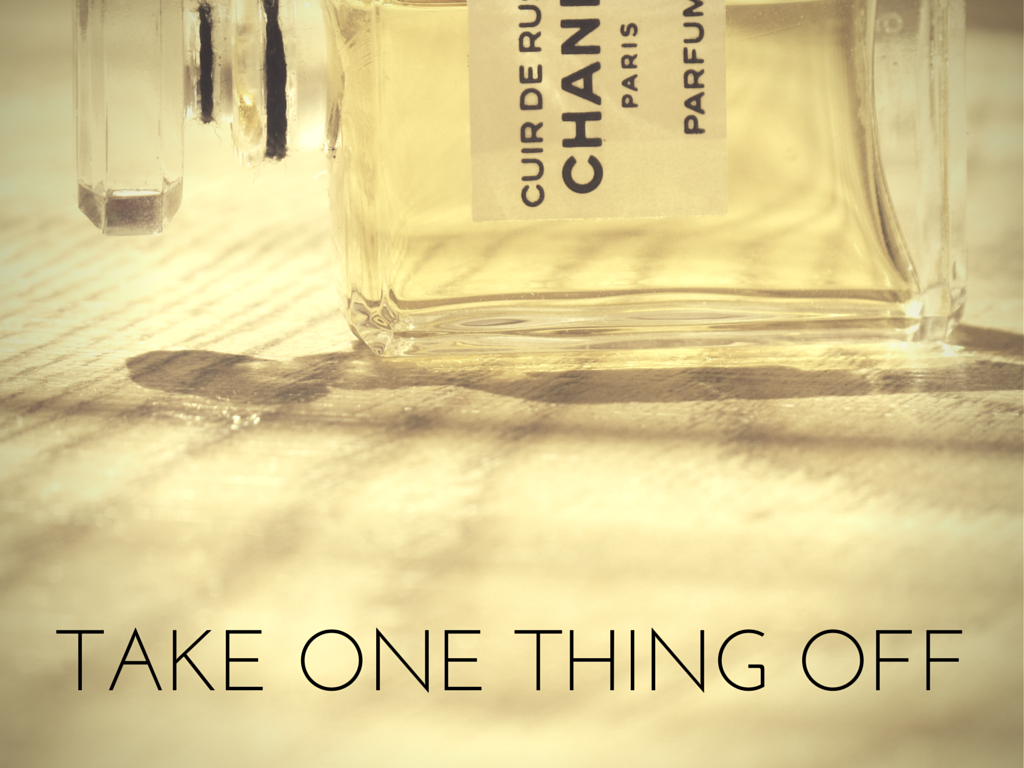
Epona is pure gorgeousness. Though I do have an equestrian background myself, horsey perfumes can be a little bit too on the nose with the mane accord – Arabian Horse by Pierre Guillaume, Corpus Equus by Naomi Goodsir, for example – for people sans horsey background to really enjoy. Epona sidesteps the trap of literalness by being a fully-fledged perfume built around an agrestic scene rather than a hammer hitting the pony button over and over again. Let me put it another way – this is a horsey perfume for someone whose idea of horse heaven is more Chanel’s genteelly-saddle-soapy Cuir de Russie or a horse seen through the soft glow of a Tiffany lamp than the actual animal itself.
The opening, for example. With its rush of astringent violet and iris ionones, you are plunged into a forest glade with spring flowers and roots pushing up through the frozen soil. Rather than sweet, it smells chalky, like stamens and roots split open, diffused in a cloud of wood or floral esters that make my head swim as effectively as waving a newly opened bottle of grappa under my nose. Emotionally remote flowers in cold storage, plus the beginnings of something mossy and brown-ish that makes me think of Jolie Madame or Miss Balmain (Balmain). On reflection, this makes sense to me because there is something about Balmain perfumes, especially in extrait form, that smells modern and old at the same time.
Past the chilled ionone rush of the topnotes, there develops a sweet, slightly smoky-grassy note that I first felt was hay, but am confident now is incense, and specifically an unlit stick of nag champa. This dusty-powdery accord comes in so closely behind the chalky violet-iris opening that it momentarily confuses the direction of the perfume – you begin to wonder, is this an austere Miss Balmain-ish thing or are we going in the direction of a New Age momma? I got my son to smell my arm, and he said immediately, old church.
And for a while there, Epona does smell ‘old’ in a really good way, like the wood in an old church, dusty old clothes in a trunk to explore, and so on. What I appreciate about Epona, though, is that this is just one stage in its development, because just when I begin to wonder where the horse in this picture is, the perfume begins its slow slide into the outdoors, all sun-warned hay, narcissus, alfalfa, woodruff, a light starchy leather, and the softly ‘rude’ aromas suggestive of, first, a pasture, and then, finally, a horse. But only the vaguest suggestion of a horse.
The trajectory from cool to warm is so smooth, you barely register what’s happening. Though mostly a pastoralist aroma-scope, the warm, boozy aura makes me think of a childhood spent walking into rooms where the adults are or were drinking glasses of a slightly smoky Irish whiskey. Perhaps it is the ionones creating a familiar sweet, newspaper-whiskey tonality (subliminally Dzongkha-ish in my memory palace), but either way, it is extremely pleasant.
So extremely pleasant, in fact, that I can’t stop imagining that Epona – in this phase at least – smells like the Caronade the way I remember it, fully loaded with Mousse de Saxe and those complex, brandy-ish De Laire amber bases. Now, it is no small feat to pull off an approximation of an older Caron extrait (En Avion and Nuit de Noel are the ones that jump to mind here), and I have no idea if that’s even something Liz Moores was aiming for, but that is exactly what I feel I am smelling here – a complex, mossy-smoky-sweet leathery floral that is half spice and half face power.
Of course, nothing this beautiful lasts forever, but I enjoy the hell out of this Caronade phase until it trails off into a persistent honey note that smells like a pissy narcissus material to me, not a million miles from the drydown of Tabac Tabou (Parfums d’Empire).
This is by far my favourite of the Papillon perfumes.
Source of Sample: Gratis sample sent to me for review by Liz Moores.
Cover Image: Photo by Bozhin Karaivanov on Unsplash
Vanille des Afriques is essentially a reformulation of Vanille d’Iris to adhere to IFRA regulations but with the addition of a bourbon and a Madagascan vanilla absolute to replace the Tahitian vanilla of the original. In other words, if you liked Vanille d’Iris, then chances are you will like this too. Personally, though I liked the original Vanille d’Iris well enough, it came at a time when I was searching for more drama in my vanilla. This time around, I can better appreciate its gently monochromatic beauty. With its starched orris against the clean, rubbery magnolia and oceans of musky vanilla cream, it is perhaps the whitest thing in Africa right now other than me.
White doesn’t mean boring, though. There is a creamy-sour lime or bergamot tinge to the pop of orris in the topnotes that lends the perfume a pleasant bitterness, similar to the topnotes of Infusion d’Iris Absolue (Prada). Carrot seed adds a bright, almost savory muskiness that reminds me somewhat of the creamy vegetal vibe of Evernia (soft-stemmed greens cooked for hours in Irish butter into a gray-green sludge). The florals that move underneath are, in typical Ormonde Jayne style, sheer but strangely robust – the rubbery, apricot-skin tartness of osmanthus makes itself known first, but the lemony ‘cold cream’ aspect of magnolia is also evident.
Just don’t come to Vanille des Afriques looking for drama. Despite the double dose of vanilla, it is neither ‘delicious’ nor indeed particularly vanilla-ish. Despite the listed jasmine and the ‘Afrique’ in the name, this is no bold, exotic creation in the manner of L’Elephant (Kenzo), African Leather (Memo), or Afrika Olifant (Nishane). It is not florid or tropical or spicy. Rather, it is as luxuriantly bland and soothing as a wodge of ugali, the thick white maize meal used as a spongey foil to goat stews and steamed kales here in East Africa. And therein lies its beauty – sometimes life itself is so spicy that you just want a cooling starch upon which to rest your weary head. And Vanille des Afriques is a beautiful example of this olfactory pillow.
Source of sample: PR sample provided courtesy of Ormonde Jayne, with no obligation to provide a review.
Sakura by Ormonde Jayne: A Review
29th March 2023
Sakura by Ormonde Jayne is a Venetian sunset in a bottle, a serene blue sky streaked with pink, apricot, and gold. It gives me the curious sensation of being relaxed and invigorated at the same time. With its crisp but milky florals, that first spray feels like a white-gloved waiter handing you a Bellini – fridge-cold Champagne poured over a puree of white peach – with a drop of cream added to aid digestion. It arrived on a morning so cold that the bottle itself felt like handing ice. It was only later that I noticed that the colour of the bottle matches the emotional hue of its contents – at the bottom, a bright, clear layer of peachy osmanthus jelly, volatile citrus ethers, and muddled green leaves, at the top, a cloudy tint that might be almond milk blushed pink with cherry blossom.
Sakura borrows heavily from the Ormonde Jayne library, with clear reference to the bright, sunshiny osmanthus of Osmanthus, the tango between the lime peel and buttery gardenia cream of Frangipani, and even some of that green-tinged milkiness of the brown rice in Champaca. But it never once feels like a re-do. I feel the self-assured touch of an experienced perfumer here, one that knows that the difference between referencing a house DNA just enough to give the wearer a sense of familiarity and recycling old tropes because all the new ideas have run out.
I used to live in a city where apartment buildings were ringed with cherry trees, and to me, cherry blossom smells very light, fresh, and indeterminate. Their scent is delicate, with some nuances similar to lilacs, by which I mean they smell honeyed, green, pollen-y, and very slightly bitter or woody. But real cherry blossom doesn’t smell anything like its representation in commercial perfumery, where, being entirely a fantasy note and not a real material for perfumery, it is invariably interpreted in a heavily fruited, cherry-like, syrupy, and almondy fashion.
Sakura by Ormonde Jayne avoids this trap. It captures the sharp, fresh brightness of cherry blossom live from the tree, thanks mostly to a clever clustering of greenish, pollen-laden floral notes (cyclamen, freesia, water lily) and the woody, ionone-rich twang of violets. But make no mistake – the freshness does co-exist with sweetness. Someone, somewhere along the line decided that cherry blossom is predominantly sweet, so Sakura is amply cushioned with enough rose, sandalwood, tonka, and creamy white musks to align it with the collective idea of what cherry blossom smells like, i.e., soft, feminine, a bit powdery, and so on.
But never mind that. The real magic of this scent is at its melting point, where the fresh, sueded florals sink into the milk and pollen below. The combination of sharp and milky achieves the same sort of milk-over-ice, endorphin-releasing effect as Hongkong Oolong for Nez Magazine (bitter tea against milky floral musks) and Remember Me by Jovoy (fresh green leaves against steamy condensed milk). Alas, the glory of this moment passes quickly and the rest of the experience is more humdrum. That is to be expected, I suppose – some beautiful things are meant to flare brightly and then die out. But while its sillage is not immense, Sakura has impressive longevity on my skin, wafting subtle hints of sharp but milky floral essences for a good twelve hours or more. I highly recommend Sakura as a transitional spring fragrance, as it is crisp and invigorating enough to make you yearn for the new plant growth due any day now, but warm enough to brace you against the chill of March wind.
Source of sample: Sent to me by the brand for review. However, this is a perfume that I would have certainly purchased for myself after sampling it.
Cover Image: Photo by Great Cocktails on Unsplash
Baruti Indigo: A Review
21st March 2023
Spyros Drosopoulos of Baruti is one of the most consistently original perfumers I have ever encountered. Baruti Indigo is a case in point. This is a perfume built on a series of weird but wearable contrasts.
First, it is balsamic but also airily floral. With its clutch of frankincense and mastic, it smells like a dense wall of greenish balsams – all crushed pine needles, sap, and terpenes – through which a slightly wilted (but still deodorant fresh) tandem of oily hyacinth and lush rose throbs like a flesh wound. Still, despite all the floral and balsamic notes, the first big hit to the synapses is of polished wood and spice.
It is never less than syrupy sweet, thanks to that rose, but it is also as vegetally piquant as long fingers of butter pickles fished straight from a jar to your mouth. This watery, almost cucumberish element seems like it would make the scent feel fresh, but instead, the overall impression is one of dark, seedy warmth.
Something about the interaction between the peppered wood, the gripe water florals, and that balsamic curtain of green makes me think of something delicious reduced to a dark, sticky concentrate. Its nectary heft makes me think of those balsamic vinegar glazes you buy to drizzle over a tagliata or green walnut salad – sweet, sour, and thick with the umami tang of Parmesan or soy.
The sandalwood and labdanum in the base are supposed to bring the bodacious comfort of an amber to finish things off, but hold up, because though there is creaminess, it is the animalic creaminess of goat yoghurt, sweat, and caramel taken too far past burning point. The lingering tartness or acidity from the hyacinth, or maybe even from Baruti’s signature ‘nood’ – a dank, metallic, but rousing synthetic base built to approximate oud without using any of the industry’s off-the-shelf oud synths – runs in the background like an application, giving the blend an addictive piquancy that keeps your nose returning for more.
Like many of Spyros’ creations, Indigo is perhaps too special or distracting for me to wear on a regular basis. But I plan to buy it one day, if only as a piece of olfactory art I bring out for those specific moments when I want to tumble down wormholes and wander the labyrinthine pathways of a true artist’s imagination. Vero is gone. But we still have Spyros.
Source of Sample: I purchased a sample from Indiescents quite a few years ago.
Cover Image: Photo by miro polca on Unsplash
Fruit, Flowers, and Funk: Hedonik Obsessive Devotion
21st February 2023
I love that in the promotional materials, Francesca Bianchi refers to the fact that champaca absolute has a fleshy, ‘human bodies’-like smell. It really does. In perfumery, champaca is managed in one of two principal directions, namely, either towards its shampoo-like and fruit-custardy facets (touched here and there by mint and green apple), making it the perfect accompaniment to tropical floral perfumes, or adding it to nag champa-heavy compositions so that a line is drawn to the original dusty floral incense stick smell of Indian agarbatti, which used to feature real champaca absolute before being dumbed down for cost reasons.
But Francesca Bianchi doesn’t go down either of these routes. Instead, she chooses to accentuate the rich, musky ‘body odor’ aspect that lingers in the unneutered, un-interfered-with absolute. (Well, of course she did, she’s Francesca Bianchi. If you’re surprised, you must be new here). The only other perfume I’ve smelled that accentuates this part of champaca was the challenging Afrah by Amouage, but not only is this long discontinued, but it is also revolting. Obsessive Devotion is Francesca Bianchi* showing Amouage how it should be done.
The opening is so sharp and gasoline-like that I urge caution when lighting a match anywhere near it. This is the coarsely fruity honk of ylang and champaca flowers dunked in petrol and laid out on peach skins to dry. Along similar lines to Tropic of Capricorn by Olympic Orchids, there is the sensation of piles of wet fruit peels and flowers stewing in equatorial heat, turning slightly garbagey at the core, but with the sharp elbows of rot tamped down with a chalky cocoa-ish note. This ensures zero shriek. Yet, dusty as this secondary accord may be, we never stray into nag champa territory.
In fact, over time, it is the bitter, saline oakmoss that prevails, pulling the scent out of the Caribbean and back into Europe. The sexy Bianchi DNA of acidulated leather-iris is also firmly present. As these basenotes emerge and thread their wares into the fruity-floral funk of the main body of the scent, you notice that Obsessive Devotion is retro in feel, to the point of being downright chypric – it is rich, swampy with oakmoss, a bit perfumey and bitter in all the right places, and powdery when it needs to be soft. The far drydown is a tip of the hat to Mitsouko (Guerlain) in that it smells pleasantly acrid, like the sweated-and-dried skin of a lady following a moderate tromp through a city. But that humid funk of that champaca never quite departs the scene. Obsessive Devotion is Parisian 16th arrondissement in the front but all Marseilles in the back.
* How often do you guys think I can say Francesca Bianchi in this review without summoning her to appear through my bathroom mirror?
Source of sample: Sent free to me by the brand in PR.
Cover Image: Photo by Del Barrett on Unsplash


