Browsing Category

Violet

Attars & CPOs Floral Green Floral Mukhallats Orange Blossom Osmanthus Review Rose Sandalwood Spicy Floral The Attar Guide Tuberose Violet White Floral Ylang ylang

The Attar Guide: Floral Reviews (0-A)

1st December 2021


007 (Hyde & Alchemy)

Type: concentrated perfume oil


No. 007 is a little bum fluff of a thing – a peachy honeysuckle that leans waxy rather than green or fresh.  Orange blossom adds a candied edge, like marshmallow and honey whipped together for a sweet, foamy ‘mouthfeel’.  The coconut stays firmly in the background for most of the scent’s trajectory, allowing the peach and honeysuckle notes to shine.  The subtlety of the coconut note means that this never turns into a beach fest, instead keeping its toes firmly tucked inside the fruity-floral category.


Further on, angelica adds a watery greenness that sharpens the scent up a bit, adding some much-needed definition to the fuzzy honeysuckle.  All too soon, however, the scent unravels into a sweet, cottony floral musk that is pleasant but ultimately a little too eau de department store for a genre that promises something a little quirkier.


No. 007 is a soft fruity-floral musk that will appeal to young women who do not want to be challenged by their scent and yet who also do not want to smell like every other gal in town.  Sometimes, pretty is all one wants, and in this respect, No. 007 certainly fits the bill.  However, if you are going to the trouble of ordering an indie over the Internet, why settle for something that smells like something you would get on the high street?


008 (Hyde & Alchemy)

Type: concentrated perfume oil


No. 008’s citrusy jasmine opening says super femme, but a sudden wave of spicy bay rum takes everything to a darker, more masculine place.  Bay rum, a traditional component of men’s aftershaves, draws on the moody bitterness of bay leaf as well as the sweet darkness of fine Jamaican rum.  Spiced heavily with black pepper and sometimes clove, this note is associated with classic male perfumes such as Pinaud Clubman Virgin Island Bay Rum and Aramis Havana.   Here, the bay rum accord acts upon the syrupy, purple jasmine note to give it a sexy, nocturnal edge.  Booze, spice, and indolic white flowers – what’s not to like?


There is light in the murk of this spicy jasmine oriental, however, in the form of wafts of fresh, powdery heliotrope and rose.  These small-petalled, almost babyish floral notes take all the sting out of the bay rum, rendering it more conventionally feminine in feel.  In fact, No. 008 has all the bones of an eighties powerhouse.  The manner in which its salt-flecked base of sandalwood and Ambroxan supports the spicy, musky jasmine is quite close to that of one of Creed’s best fragrances, Jasmin Impératrice Eugenie.  However, a beguiling hint of industrial rubber ensures that No. 008 feels modern and up to date.  Interesting stuff, and, well, big.


009 (Hyde & Alchemy)

Type: concentrated perfume oil


Mmm, creamy coconut shampoo.  Rinse and repeat.  No. 009 smells almost exactly like one of those fruity monoï shampoos you get from Yves Rocher, crossed with the ambered sweetness of an Argan oil hair product like Moroccan Oil.  Note that there is absolutely nothing wrong with wanting to smell like a lush hair product.  Scents that smell like personal care products are both insanely evocative and comforting.  Look at the number of people who want to find a perfume that recreates the smell of 1970s Revlon Flex.


No. 009 has the same creamy, solar feel as Intense Tiaré by Montale, so if you like smelling beachy, keep your eyes peeled for this.  It might also be a good one to test if you love Oud Jaune Intense by Fragrance du Bois, but your wallet does not.


013 (Hyde & Alchemy)

Type: concentrated perfume oil


Wintergreen toothpaste!  Germolene!  Ylang has a medicinal, camphoraceous aspect not often emphasized in perfumery, but here, the perfumers seemed to have rolled the dice and won.  The opening of No. 013 delivers the same Listerine slap to the face as Serge Lutens’ great Tubéreuse Criminelle.  Indeed, in Britain, Listerine is known as TCP, which happens to have the same initials as Tubéreuse Criminelle Parfum (coincidence? I think not).


The tiger balm mintiness of the ylang softens but never dissipates completely.  It freshens up the earthy, almost metallic breath of a lei of mixed tropical flowers – jasmine, orchid, gardenia, as well as ylang.  This combination of creamy and medicinal notes means that the fragrance has a sultry tropical feel, but also the nipped-in waist of proper corsetry.  Clods of earthy patchouli in the drydown provide a humid soil pillow for the florals in much the same fashion as Manoumalia (Les Nez).


No. 013 is a balmy tropical floral that feeds you all the earthier, leafier parts of the island experience, and very little of the sugar or cream that normally accompanies it.  It might be just the thing to convert a self-avowed tropical floral hater.  A hint of dark cocoa and amber in the tail is further inducement, should you need it.     


Absolute Jasmine (Clive Christian)

Type: concentrated perfume oil


Absolute Jasmine opens with a Lanolin-like note, lending the composition a strange waxy texture and an oily aroma that has more in common with the fishy smell of pure silk than with floral absolutes.  This (to me) beguiling topnote melts away into a bitter, peppery leather accord with dark plum and cinnamon undertones plumping it out from beneath.


A spicy Coca Cola-like note is next to pull free, reminding me of the moment in Jasmin de Nuit (The Different Company) when the dark jasmine butts up against the rose, star anise, and cardamom to create a sweet, fizzing soda note that tickles the nose.  In Absolute Jasmine, the tone is much more astringent – nothing sweet or creamy here – but in the meeting of jasmine and spice, much the same effect is achieved.


Absolute Jasmine is a dark, serious perfume with a masculine edge.  In a way, it does for jasmine what Tom Ford’s Black Violet did for violets, which was to marry the girlish sweetness of violets to a phenomenally bitter, mossy drydown – a sort of mash up between flowers and aftershave.  Absolute Jasmine is a sugar-free jasmine Coca Cola perfume oil for sugar-free adults.


Absolute Orris (Clive Christian)

Type: concentrated perfume oil


Orris can be twisted in several different directions, depending on the material used and the composition of the perfume.  It can be pulled into a waxy-lipsticky direction, most commonly used in perfumes evoking the smell of cosmetics, like Chanel’s Misia and Histoires de Parfum’s Moulin Rouge.  Some orris materials smell more like violets than iris, as evidenced by Iris by Santa Maria Novella and, to some extent, Heeley’s Iris de Nuit.  Iris also has rooty, metallic facets that can be accentuated, the most famous example of this type being Iris Silver Mist by Serge Lutens.  But many perfumes choose to accentuate the doughy suede elements of iris, and this is the direction taken by Clive Christian for Absolute Orris.


The opening of Absolute Orris is a stark representation of orris root – wet newspapers, carrots, soil, and ice, mixed with stranger elements such as glue and the plastic backing on industrial carpets.  Running through this opening accord is a shoal of bright, silvery notes, which on paper read as citrusy, but on the skin turns out to be something between black pepper, mint, and metal.


Absolute Orris evolves into a smooth, buttery suede but retains a certain bitterness inherent to the material.  Admirably, the perfume does not attempt to cover this with sweet or creamy supporting notes, but instead just leaves it there, as stark and uncompromising as the stone heads on Easter Island.  This accord is both luxurious and straightforward, shorn of noise and distraction.  Highly recommended for professionals of any gender with a taste for quiet but forceful luxury. 


Absolute Osmanthus (Clive Christian)

Type: concentrated perfume oil


Absolute Osmanthus comes with an overdose of woody aromachemicals that obscures the delicate beauty of the osmanthus, making it virtually impossible to evaluate on the skin.  On paper, however, there are hints of what I feel I am missing – apricot jam, buttery leather, and sappy green leaf notes that inject a mood of brightness into the entire affair.  Those who are less sensitive to woody ambers will probably enjoy this in full on their skin.


Absolute Rose (Clive Christian)

Type: concentrated perfume oil


Revolving around the bright rose de mai varietal, Absolute Rose is a sun-lit take on a garden rose framed by accents of citrus, herbs, and spice.  A tart lime-peel bergamot lifts the topnotes, leading into a heart that smells like a pale pink rose plucked from a rain-soaked garden.  Geranium leaf boosts the green rosiness inherent to this varietal, but also injects a delightful hint of garden mint, green leaves, and rhubarb stalks.


This sits at the opposite spectrum to the dark, syrupy roses of most Middle Eastern perfumery.  It is a young rose, content to simply sparkle against a backdrop of garden greenery.  Saffron adds a hint of earthy leather in the base, but generally, the wet herbal feel of the rose and geranium is what dominates.  Think Galop (Hermès) dialed back by a factor of seven.


The fresh dew of the rose has been preserved throughout and not allowed to suffocate under a blanket of smoky resin or syrupy amber.  This treatment imbues Absolute Rose with an almost Victorian sense of elegance.  Men and women looking for a dandified take on a garden rose should seek out a sample of this.  Its lack of embellishment and sweetness makes it perfectly suitable for men who are wary of flowers, and roses in particular.  This is a particularly unsentimental take on rose that won’t remind anyone of their grandmother. 


Akaber (Majid Muzaffar Iterji)

Type: mukhallat


A massively-upholstered floral vanilla attar with an anisic-amaretto tint, Akaber recalls – with suspicious fidelity – the most popular floral vanilla gourmands of the late nineties, i.e., Hypnotic Poison and Dior Addict.


Al’Ghaliyah (Kyara Zen)      

Type: mukhallat


Al’Ghaliyah is so beautiful that it is difficult to describe it without gushing.  Ghaliyah mukhallats are common in Middle-Eastern perfumery but the bulk of them are harsh and synthetic in aroma.  I do not know if Kyara Zen’s version of it is completely natural, but it sure smells like it might be.


Kyara Zen’s Al’Ghaliyah is one of the very few rose-oud mukhallats that manages to achieve perfect balance between the elements in the blend – a rich, perfumey oud that smells like liquid calf leather, a winey rose with no sourness or sharp corners, and what smells like a golden nectar of apricots, peaches, plums, and osmanthus soaking into all the other notes.


All the elements reach the nose at once, cresting over each over continuously like the swell of a wave.  The bright rose runs straight through the blend like a piece of thread, so even in the basenotes you can sense its rich, red presence glowing like pulp through the oud and musk.  It is unclear whether the succulent fruit notes are emanating from the oud or the rose, but there is a cornucopia of winey, autumnal fruits to savor here.  The fruit notes fade away gently, leaving the rich rose to proceed on its own.


According to Kyara Zen’s Instagram feed, it appears that genuine deer musk grains were macerated and then added to the final blend.  If that is true, then it is a clever vehicle to demonstrate to people that genuine deer musk does not smell as dirty or as fecal as its recreations sometimes make it out to be.  Rather, it is unobtrusively musky, with all the pleasing warmth of a clean, furred animal. 


Overall, the richness and depth of this mukhallat is astounding.  I applaud the skill of the perfumer who managed to corral two or three of the most commonly-used raw materials in mukhallat perfumery and shape them into a form that smells, if not new exactly, then a hundred times better than other iterations of the same materials.  The liquid embodiment of a piece of gold-threaded brocade, Al’Ghaliyah is one of the most beautiful things I have smelled on my journey.


Al Ghar Blend (Abdul Samad al Qurashi)

Type: mukhallat


Al Ghar is what I feel comfortable calling a girly, gourmand take on the rose-oud mukhallat theme.  Al Ghar’s prettiness is so understated that it is easy to miss entirely.  A creamy, woodsy blend dusted with rose powder, it takes on the theme of oud in a way that is teasingly subtle, its soft, abstract nature making it difficult to identify and place all the disparate elements.  But this is a scent that rewards patience.


The oud, saffron, and rose opening is medicinal, but not challenging to anyone who has ever sat out the opening of a Montale.  The oud used here, although purportedly real, has a band-aid twang common to the synthetic oud used in most Western oud fragrances.  The oud note is lightly handled, extended at one side by an astringent, leathery saffron and on the other, dusty woods.  The rose takes shape as a powdery potpourri note that peeks out shyly from behind the other notes.


A few hours later, creamy, ambery warmth starts stealing over the medicinal opening, flickering in and out over the top, like someone spreading a lace cloth over a table and then whipping it off again.  The caramel sweetness of labdanum mingles with the dry, medicinal oud and saffron to create a wonderful saltwater taffy note.  This hazy, golden oud-amber-saffron accord stretches out in the base like a cat, picking up an alluring dash of black pepper or clove as it goes on – just enough to warm the tongue but not to make anyone sneeze.


The base features a milky sandalwood that is far more of a texture than an aroma.  It is unclear whether Mysore or Australian sandalwood has been used here, but it doesn’t matter because the only thing it is asked to do here is to hand over its cream and be quick about it.  


I really like Al Ghar.  It is the definition of something delicate for when one is feeling, well, delicate.  It calls to mind the comfort of a caramel latte or a cube of milk chocolate sprinkled with salt – piquant, but at the same time, soothing.  Coming close in mouthfeel to both White Oud (Montale) and Red Aoud (Montale), I recommend it highly to those looking for a sweet, quasi gourmand take on the traditional ‘attar’ smell of saffron, rose, oud, and sandalwood.  It also smells a little like pandan, which is a good thing in my book.


Al Hareem Blanc (Sultan Pasha Attars)

Type: mukhallat


Despite the name, Al Hareem Blanc neither bears any relation to the original Al Hareem nor contains anything truly blanc-feeling in the composition, apart from a tiny dab of heliotrope which immediately gets gobbled up by the other more powerful notes.  The opening is dominated by a beefed-up, muscle-bound tuberose with an acetone edge so powerful that it gives you the same head rush as sniffing an open can of paint thinner.  It is a startling, unique opening, if not entirely pleasant.


Slowly, as the nose adjusts, it becomes clear that the benzene honk is that of a very pure, very strong tuberose absolute, whose aroma may be further broken down into its constituent parts of fuel, glue, rubber, and the decaying pear notes of nail polish remover.  Dry woods, smoke, leather, and engine oil follow, making this one of the rare tuberose-dominated scents that men might feel comfortable wearing.


Men, if you are looking for a butch floral and are scared to death that someone in the grocery store might accuse you of wearing, gasp, a white floral, then get yourself this.  Al Hareem Blanc is unambiguously male.  It is a leather bomb made up of metal splinters of an equally tough, rugged flower.  Actually, the tuberose in Al Hareem Blanc is really less a flower and more assless chaps.


Al Lail (Sultan Pasha Attars)

Type: mukhallat


Al Lail, meaning The Night, is Sultan Pasha’s tribute to one of the stinkiest, civet-laden fragrances of all time, the notorious La Nuit (The Night) by Paco Rabanne.  However, Al Lail is not a literal copy.  It sidesteps, for example, the immensely sharp pissiness of the honey-civet in the original, and replaces it with a dusty, spicy floral musk that owes more to carnation-heavy feminine classics such as Caron’s Bellodgia and YSL Opium than to La Nuit.


The opening also diverges from its inspiration by plumping for the botanical freshness of a kitchen garden over the rather dated narcissus greenness of the original.  The opening is juicy and fresh – clusters of orange, rose, mint, and white jasmine, freshly picked and with dew still on them.  A striking artemisia note offers the kind of green bitterness that you can almost feel on your tongue.  Going into this expecting a re-do of the immediately funky La Nuit, I was surprised and charmed by this freshness.  It is a diversion, but a clever one, serving to juxtapose what comes next.


In Act Two, Al Lail promptly shakes off the sunny innocence of its ‘ripped from nature’ topnotes and settles into a smoky carnation and oakmoss gunpowder, the jasmine deepening into black marker pen indole.  The notes all dry up into a floral potpourri of dried carnation and rose petals, with a note in the background that smells pleasantly of yellowing book paper.


Stuffed to the brim with greasy, vintage-style musks, there is almost a suffocating effect to the perfume that reminds me of Charogne by État Libre d’Orange.  Wearing it chokes me slightly, like a mink stole tightened too carelessly around my throat, or the acrid fug of air that rushes out at you in a bar that still allows smoking.


Al Lail smells less like La Nuit and more like Bellodgia and Tabac Blond with their spicy, powdery clove-tinted glove leather.  However, that reference leaves out the most crucial piece of information, which is that this powdered carnation-leather accord is wrapped up tight in a straitjacket of rude musks, civet, and salty, grungy body odor – a sort of animalic distortion of the Caron ideal.


The heavily musky ‘old’ honey accord in the base is very similar to that of Sohan d’Iris, so if you love that one, you may also love Al Lail.  Personally, I could never wear Al Lail, for pretty much the same reason I cannot wear La Nuit – while I appreciate the genius of their construction, their heavy animalism is hard to wear elegantly.  However, my tolerance for animalics might be lower than yours, in which case, take the chance.


All in all, Al Lail is a proper little stinker made with love for those who revere the huge, floral-animalic fragrances of the past such as Ubar by Amouage, Joy parfum by Patou, Jasmin Eugenie Impératrice by Creed, and indeed any of the older Carons (especially Acaciosa and Bellodgia).  Just imagine any of these scents with their current filthiness multiplied by a factor of ten and you have an idea of where Al Lail stands on the old skank-o-meter.


Al Maqam Blend (Abdul Samad al Qurashi)

Type: mukhallat


Al Maqam Blend is a limited edition perfume oil produced to commemorate ASAQ’s Diamond Jubilee.  In my experience, the words ‘rare’ or ‘limited supply’ do not necessarily translate to amazing, and unfortunately, this is the case here.  Al Maqam Blend is perfectly nice but does not reach the exceptional heights that some of the other blends in the ASAQ range.  And at this price, it really should.


The basic structure of the scent involves an amorphous blur of flowers over a base of sweetish amber and musk, with a blob of oud making a shy appearance and then absconding far too soon.  What flowers or fruits, exactly?  It is hard to tell.  But the sticky, bubblegummy fruitiness of the opening suggest the presence of ASAQ’s gooey jasmine and orange blossom jam, a blend that seems to bulk out many of the house’s lower-priced oils.


ASAQ lists wildflowers as part of the blend, but since real meadows are in short supply in Saudi Arabia, it is reasonable to assume that this particular bouquet of flowers was birthed in a test tube.   In general, whenever you see wildflowers listed for an ASAQ blend, it is shorthand for a fruity-musky blur of flowers that could be anything from freesia to jasmine.  The amber-musk base is pleasantly ‘fuzzy’ in texture, but not in the least bit distinctive.  It also does nothing to counteract the tremendous sweetness of the florals.


Midway through, a smoky oud note appears, briefly giving the fruity florals a sheen of something respectably woody.  More reminiscent of the scent of agarwood chips being heated on an incense burner than the scent of the oil, the oud note comes across as attractively dry and smoky. Somewhat similar to the smoky oud woodchip nuance in Dior’s Leather Oud and Guerlain’s Songe d’Un Bois d’Eté, but far less animalic, this note is the high point of the scent.  This is also the only time it feels like someone over the age of twenty-one could viably pull it off.  Too soon, however, the oud notes float right out of the scent, leaving behind a trail of sugary white florals over a generic, musky amber.  Al Maqam is an uneven, even frustrating experience.  When it is good, it is very, very good, but when it is bad, it is wicked.


Al Sharquiah (Al Rehab)

Type: concentrated perfume oil


This is for those nights when you want to leave a loud, sweet fug of rose and oud in the air as a calling card for the opposite sex. It is about as subtle as a baboon’s arse, but there is something about the sweet, sour, and rotting notes in Al Sharquiah that gets people to lean in and sniff you twice.  It smells like the fumes from a bag of slowly rotting Medjool dates mingling with oud, wilted roses, cooked rose jam, a hint of metallic smoke, and a bit of funk in the base courtesy of spiced-up woods.


Although it is admittedly a quick snapshot of all the major themes in Arabian perfumery rather than the full deck, Al Sharquiah is a reasonable substitute for far more expensive Western takes on the rose-oud theme, such as Rose Nacrée du Desert by Guerlain or Velvet Rose & Oud by Jo Malone.  All for four dollars a bottle?  Hell yeah.  I’ll have me some of that, thank you very much.


Al Ta’if Rose Nakhb Al Arous (Abdul Samad al Qurashi)

Type: essential oil


This was the first pure rose oil I ever tried, and it was a surprise to me in many ways.  By pure, I mean that it was derived through slowly distilling Ta’ifi roses in the traditional manner, syringing the pure, clear oil off the hydrosol after distillation, and storing the resulting otto in a small leather flacon to rest and mature.


Ta’ifi roses are gathered at first morning light, before the sun causes the flowers to open fully, thus preserving their immensely fresh, spicy, green scent.  Harvesting is an enormously labor-intensive process, requiring rose petals from 30-50 roses to produce just one drop of pure rose otto[i].  Al Shareef Oudh clarifies that: ‘For the pickers there is no time to lose; it is a race against time. As the blazing sun rises and moves higher the harsh rays cause precious oils to evaporate, so much so that by mid-day unpicked roses contain only half of the oil they had at dawn’[ii].


Smelled up close, the oil smells surprisingly nothing like what you expect a rose to smell like –which makes sense given that a rose is made up of over 500 different aroma compounds.  The two main ‘flavor’ constituents of rose are geraniol and citronellal, which smell sharply ‘green’ and sharply ‘citric’ respectively.  Thus, when I smell Al Ta’if Rose Nakhb Al Arous up close, I mostly smell a piercing lemony note and a lurid green note.  These notes present so acidic that it feels like you just peeled a lemon and squirted it into your eye.


The aroma is jagged, and almost animalic in its spiciness.  A rose by any other name would smell as sweet.  I am willing to wager good money that in a blind smelling test, most people would never guess that this was rose – at least not right away.


Forty minutes in, the brightness fades and the first notes that we collectively understand as ‘rose’ begin to coalesce on the skin, clustering the individual building blocks of honey, lemon, geranium, cinnamon, and pink petal notes used to construct a rose aroma in modern perfumery.  Unfortunately, pure rose ottos are extremely volatile and short-lived, so this glorious trajectory is cut short, the scent disappearing through the skin barrier and into the bloodstream within the hour.  Still, to experience real beauty, no matter how ephemeral, is always a blessing.


Aroosah (Al Rehab)

Type: concentrated perfume oil


How can marigolds be indolic?  Well, in Aroosah, as you will see, they just are.  Fresh, earthy, slightly bitter – all the hallmarks of tagetes are there in the topnotes, giving off a brief impression of a freshly-cleaned toilet.  But as the fragrance unfolds, so too does a wave of oily indoles similar to those clinging to the inside of Easter lilies, the smell of life and death repeating on itself like a bad meal.


In the later stages of the oil’s development, a heavily-greased almond undertone begins to intrude on proceedings, making things infinitely worse.  If you’ve been manfully suffering through the experience thus far, then brace yourself, Bridget.  The almond note, when paired with the grassy hay notes from the chamomile, marigold, and saffron, presents the nose with a real challenge: pungency.


Aroosah is not fresh or natural-smelling in the least, being far more redolent of bathroom cleaning detergents than anything botanical in origin.  Nonetheless, its soapy, medicinal-herbal aroma is authentically Indian in nature.  Not for the faint of heart, or indeed, stomach.


Asala Murakkaz (Arabian Oud)

Type: mukhallat


Asala Murakkaz is a nice if not particularly impressive mukhallat situated at the lower end of the Arabian Oud price range.  It opens with a pleasingly sweet, almost honeyed mix of florals, notably orange blossom and rose, accentuated with a fruity (peachy) undertone.


This is not a narcotic floral extravaganza built in the old manner, but rather a playful, modern take.  I can see this appealing tremendously to young women who love the clean, musky sweetness of fruitchoulis and gourmand florals such as Miss Dior Cherie.  The honeyed florals merge with a plush ‘pink’ musk in the far drydown, for a result that leans more towards a mass market Western fragrance than anything more authentically Eastern in nature.  Oh, and in case you were worried – zero oud in evidence here.  Asala Murakkaz is strictly for fans of candied, musky florals denuded of any rude bits or sharp edges.


Ashjan (Amouage)

Type: mukhallat


Ashjan marries an orange-tinted rose to a heavy musk that runs right up to the edge of animalic before pulling back at the last moment.  The rose notes are juicy and dessert-like, forming a mouthwatering counterpoint to the velvety, thickly-furred musk.  Given its heavy-breathing character, Ashjan is perhaps not the best choice to be worn in polite company, but it is one to consider if you need something frankly suggestive for the third date.  (Of course, this is all moot, because Ashjan is near to impossible to find now).


Asrar (Abdul Samad al Qurashi)

Type: mukhallat


Asrar is a pot of orange blossom-scented marmalade, heavily spiced with saffron, left to desiccate, uncovered, on a shelf in the larder until only fruit leather remains.  In the first hour or so, it is syrupy and densely-spiced to the point of being overwhelming. Orange blossom is not listed anywhere in the notes but take my word for it – Asrar is orange blossom boiled down into a medicinal unguent so sweet that it is bitter.  The astringent woodiness of saffron and oud cuts through the waterfall of syrup somewhat, for a pungent undertone that is necessary as an opposing force.


Thankfully, it doesn’t take long for the attar to loosen the stays on its restrictive orange blossom-honey corset, allowing a bright, winey rose to bloom in the background.  The rose expands to fill the room, joining forces with a dark, woody oud note to form a traditional rose-oud accord.  It is at this point that the attar smells like a gourmand-ish take on Montale’s Black Aoud.  The slightly candied, juicy quality in this stage of Asrar’s development is an appealing update to a rather tired template.


Hours in, the scent seems to do a volte face, morphing into a smoky, woodsy affair centering around a nugget of vetiver, cedar, and leather.  This part of the attar is almost charcoal-matte in effect.  In summary, Asrar kind of smells like a dab of Tribute on the tail end of Serge Lutens’ Fleur d’Oranger, with a brief detour to Black Aoud territory in the middle.  Whether this payoff is worth trudging through the tiresome syrup clogging the veins of the scent’s the first hour is up to you.  Plenty of people hold Asrar in as high regard as Homage or Tribute, but for me, the opening is too treacly to enjoy.  Still, there is no denying that Asrar is one of Amouage’s most characterful attars.


Atifa Blanche (Al Haramain)

Type: mukhallat


Blanche is an excellent word to describe this scent.  It is indeed a ‘white’ scent.  There is something so softly chewy about the topnotes of Atifa Blanche that I instantly visualized the scent as a white silk pillowcase stuffed with flower petals, marshmallows, meringues, and clouds of whipped cream.  It has the straight-forward beauty of a bride coming down the aisle, the sunlight behind her framing her head in an impossible halo of light.


The oil opens with a trio of sparkling citrus notes – mandarin, lemon, and lime peel – their sharpness nicely rounded out by the slightly creamy lily and rose.  There is also a noticeable lipstick note in the heart, thanks to a touch of violet.  Think the same ballpark as Chanel Misia (which is more matronly) or Putain des Palaces (which is skankier) – big, violet-y powder puff scents.  Atifa Blanche has a weird, doughy cashmeran note that distinguishes it as something that does a bit more than just lookin’ pretty.


No tuberose or jasmine, to my poor nose, but yes to a hint of rubbery, fertile ylang.  Still, there is nothing sub-tropical or Big White Floral in feel here.  If the white flowers are here, then they are have been sheared of all indole, sharpness, and that lingering ‘ladies-who-lunch’ element that seems to cling to the genre.  Atifa Blanche is a fresh, steam-cleaned floral that favors the lipsticky combination of rose and violet over its heavier white floral components.


The notes list an ozonic accord in the topnotes, but there is nothing overtly aquatic here, unless you share Luca Turin’s perception of lily as saltwater-ish.  The only real complaint that can be laid at its door is that it is slightly too squeaky clean, and a bit chemically cheap, with a muskiness that feels a bit like a freshly-starched collar.  However, bathed in this radiant aura of sweet lipstick wax, Atifa Blanche can be forgiven almost anything.  It is both innocently retro and almost (but not quite) edible.  A hundred times better than By Killian Love. 


Ayoon al Maha (Amouage)

Type: mukhallat


Ayoon al Maha is a gently powdery take on the traditional attar smell of sandalwood and roses.  It takes a fresh, tart damask rose and grafts it onto a dusty-creamy sandalwood rootstock.  The opening is bright and lush, the green and citrusy facets of rosa damascena brought forward for their moment in the sun.  The opening feels quite traditional in that it is true to the scent of the Bulgarian rose, an aroma with which many will be familiar from their childhood.  More English in feel than Arabian, therefore – at least at the beginning.


In the base, a lightly toasted, buttery sandalwood note nips at the sharp, fresh rose, covering it in cream and brown sugar.  This is likely not pure vintage Mysore sandalwood oil but rather, a good quality santalum album oil boosted with an enhancer like Sandalore (its voice rings out a little louder and sweeter than that of pure, natural sandalwood oil).


Nonetheless, Ayoon al Maha is a truly enjoyable sandalwood experience with a rich, almost caramelized facet that will make your mouth water.  There is supposedly some oud oil here, but its presence is so subtle that it is not worth mentioning.  Anyone looking for a beautiful rendition of the sandal-rose attar theme should make sampling (or even blind buying) Ayoon al Maha a priority.


About Me:  A two-time Jasmine Award winner for excellence in perfume journalism, I write a blog (this one!) and have authored many guides, articles, and interviews for Basenotes.  (My day-to-day work is in the scientific research for development world).  Thanks to the generosity of friends and acquaintances in the perfume business, I have been privileged enough to smell the raw materials that go into perfumes and learn about the role they play in both Western and Eastern perfumery.   Artisans have sent vials of the most precious materials on earth such as ambergris, deer musk, and oud.  But I have also spent thousands of my own money, buying oud oils directly from artisans and tons of dodgy (and possibly illegal) stuff on eBay.  In the reviews sections, I will always tell you where my sample came from and whether I paid for it or not.


Source of samples: I purchased samples from Hyde & Alchemy, Majid Muzaffar Iterji, Al Haramain, Amouage, Al Rehab, and Arabian Oud.  The samples from Abdul Samad al Qurashi, KyaraZen, Clive Christian, and Sultan Pasha were sent to me free of charge either by the brand or a distributor.


Note on monetization: My blog is not monetized.  But if you’d like to support my work or show appreciation for any of the content I put out, you can always buy me a coffee using the little buymeacoffee button.  Thank you! 


Cover Image: Custom-designed by Jim Morgan.

[i]Andrea Butje, The Heart of Aromatherapy (Carlsbad, CA: Hay House, Inc., 2017), 6, via Aroma Web at https://www.aromaweb.com/articles/essential-oil-yields.asp

[ii]http://www.alshareefoudh.com/product-detail.php?product_id=14


Hay Iris Leather Musk Patchouli Review Spicy Floral Violet

Le Labo Iris 39: A Review (Sort of)

15th October 2021


I have yet to come across a review that captures what Le Labo Iris 39 smells like to me, so I’m going to take a run at it myself.  Despite the advertised violets and iris, Iris 39 doesn’t smell sunlit, or powdery, or even floral in the traditional sense.  To me, it smells utterly abstract, a nigh-on impenetrable wedge of industrial cement and toner ink mixed with mud-caked flower bulbs, fuzzed up at the edges with a carbolic soap (patchouli-musk) accord that wears on you like a rain-soaked wool sweater.


I’ve noticed that the earlier Le Labo perfumes – Patchouli 24, Oud 27, Santal 33, Iris 39 – all feature this interesting tension between something natural-smelling and something ‘pleasantly chemical’, i.e., the vaporous head-spin of industrial materials like hot glue, ink, magazine paper, or burning rubber.  Perhaps this is what makes these perfumes so distinctive.  Later Le Labo output (The Noir 29, Tonka 25, Another 13) shoot for the same complexity but lean too hard on harsh woody ambers, Ambroxan, etc., thereby landing on the ‘bad chemical’ mat rather than the ‘good chemical’ one.  You know what I mean, right? A good chemical smell to me is the honest honk of fresh newspaper ink or spilled petrol or the school supply closet.  A million miles away from those powerful woody ambers like Amber Extreme or Norlimbanol that are (over) used in perfumery these days to make a scent enormously radiant or long-lasting.


So there you have it. Part of Iris 39 that makes me feel like a hippy who’s spent the afternoon planting out tubers in a wet garden, while the other makes me feel like I’m getting a semi-high from hanging around the office printer while they’re changing the cartridges.  Mostly, though, I think it’s just one of those thick, murky ‘soups’ of a perfume that are vaguely resistant to analysis, like Mitsouko (Guerlain) or Kintsugi (Masque Milano) – perfumes that are simultaneously harsh and organic.  Wearing Iris 39 gives me a physical jolt akin to being so hungry for the first bite of something that, even before it’s fully tasted, your mouth waters so suddenly it’s almost painful. 


Source of sample: Various samples, decants, and finally a full bottle, all of which I purchased myself.


Image:    Photo by Darklabs India on Unsplash  


Balsamic Coniferous Green Independent Perfumery Oud Review Violet Woods

Ormonde Elixir by Ormonde Jayne: A Review

31st August 2021

Ormonde Elixir is 45% Ormonde Woman, 45% Ormonde Man, and 10% oud oil.  I’m not mad at those percentages. The oud smells like the real deal has been used, and in more than holistic quantities too. The notes say Cambodi, but it smells like a hyper-smooth blend of Cambodi and Hindi oud to me, with the hot, bilious pleather of a Hindi (Hermès saddles buried under dirty straw) rubbing shoulders with the honeyed, berried undertone of a Cambodi (undiluted cranberry cordial) until the platonic ideal of the aroma profile that most people would think of as ‘oudy’ emerges. The oud imbues Woman’s lovely face with a menacing five-o-clock shadow, which is no mean feat given that Woman was already a moody black-green to start with. It punches Woman up a few notches, giving it a pungent, almost feral depth, without sacrificing any of the original’s gym-honed sleekness or its distinctive treacle-tart amber base.

In short, Ormonde Elixir is the Platinum card upgrade to the Gold of the original Woman. And it is absolutely beautiful. If you’re starting out and you want to own just one of the Woman/Man series (and have the money to spend), then this right here is the smoothest, deepest, and more luxe version of the series. However, if you already own either Ormonde Woman or Ormonde Man, then you own 90% of Ormonde Elixir. Personally, I’ve reached the ‘more sense than money’ stage of this hobby, so a sample of Elixir is enough to satisfy the itch. 


Source of Sample: A 1ml sample purchased from Neroli, Budapest.

Photo by Sleep Music on Unsplash

Balsamic Citrus Coffee Collection Cult of Raw Materials Floral Fougere Green Floral Incense Independent Perfumery Iris Jasmine Lavender Leather Musk Oriental Osmanthus Oud Resins Review Rose Round-Ups Saffron Sandalwood Smoke Spice Spicy Floral Thoughts Violet White Floral Woods

Areej Le Doré Agar de Noir, Musk Lave, Cuir de Russie, Grandenia, & Santal Galore

28th September 2020

The challenge for any reviewer in reviewing the Areej Le Doré releases is that (a) either you’re late and the perfumes you’re writing about are no longer available to buy, or (b) you’re on time for a full bottle release, but you are talking only to the group of three to six hundred people that are buying them, a tiny circle of devotees that seems to get tighter and more closed-off with each successive release from the house.

I can certainly see why many people in perfume-land might be attracted by the fantastic raw materials on offer by Areej Le Doré but turned off by the feverish fandom that has sprung up around the brand. If you’re not willing to set your timer to bumfuck o’ clock Thailand time or duke it out with the scalpers, then the whole thing can feel like the most fearsome clique from high school. And when anyone feels excluded, there is the natural tendency to grumble to yourself, “Well, if I’m not in, then I’m sure as hell out…of this hot, culty mess.”   

While this is certainly not a problem for Areej Le Doré itself – selling everything you produce is the dream, after all – I wonder if the lack of new entrants into the inner circle of devotees represents a problem over the longer term. Fresh perspectives on your work are essential whether you are making a car or a perfume because they stop you from drowning in the reflecting pool of constant and uncritical adoration. They also safeguard the perfumer against the danger of becoming essentially a private label or custom outfit dancing to the whim of a small but intimidatingly vocal group of buyers, none of whom I’d particularly like to meet in a dark alley. Just kidding, just kidding (sort of).

Anyway, this review goes out to anyone who has an interest in Areej Le Doré fragrances but has, for one reason or another, avoided actually buying them, either in sample or full bottle form. This might be someone who loves natural raw materials, for example, or someone who loves and misses the rich orientals of yesteryear that boasted real sandalwood or expensive floral absolutes. Or it might be people who are into perfumes in general and have the money to invest in the really good examples, but zero stomach for the clusterfuckery around the brand itself. If that’s you, and you’re reading right now, then let me tell you that this particular Areej Le Doré collection is the one to dip your toes into, if you were reluctant before.

Here’s why I think this collection is a good entry point for newcomers to Areej Le Doré. First, the perfumes in this collection are noticeably lighter and more refined than previous cycles, making them easier and more pleasant to wear, especially for women.

Second, none of the perfumes in this collection are marred by the heavy, almost seedy animalic undertone that has dogged other collections. For example, I loved Plumeria de Orris from one of the previous collections, however, once the buttery orris and frangipani burned off, the fragrance was dragged under the gutters by a honeyed civet or musk that smelled disturbingly like dried saliva. Koh-i-Noor was my absolute favorite of a previous generation, but a greasy costus-laden musk gave it an old-man’s-crotch vibe that I couldn’t quite shake. But in this collection, even the musk- and oud-heavy perfumes are not overly heavy, greasy, or saliva-ish.

Third, and probably the most important one: I think that this collection is Russian Adam’s best yet. If you don’t know already, each Areej Le Doré collection usually contains variations on a basic line-up of a (i) musk (usually natural deer musk-based), (ii) an oud, (iii) a humongous mixed oriental floral, (iv) a ‘soliflore’, (v) an ambergris, and/or (vi) a leather or sandalwood. Although there doesn’t seem to be an ambergris-focused scent this time around, the others are all either superlative or really good examples of their respective ‘theme’. If you love natural raw materials like oud and sandalwood, then pull up a chair: brands like Areej Le Doré are the last holdout for exquisite raw materials in a world that is increasingly sanitized and lab-molecule-dependent.   

Image by DEZALB from Pixabay

Rather confusingly, Santal Galore is the kaleidoscopic floral nag champa extravaganza this time around, rather than the sandalwood you might be expecting (which is actually to be found in the equally-confusingly-named Musk Lave). My vial leaked in transit, but after smashing it open and swabbing the gooey remnants onto my skin with a Q-Tip, I can tell you that this is the one I’d crawl over hot coals to smell again. Oh God, grant me the unlimited funds to buy the few perfumes that smell as good as this. It opens with a big, creamy swirl of aromas that you imagine emanating from a Persian carpet or a well-oiled antique from a souk, soaked in multiple generations’ worth of glossy, fruity Cambodi oud oils, rosy-sandal attars, and the sweetness of smoke from decades of burning Indian Chandan sticks and barkhour.

This perfume carries that full romantic sweep of Orientalia in its bosom that Westerners like me find so irresistible but that usually come out mawkish and kind of cheap-smelling. Santal Galore deftly matches the slightly gummy-floral sweetness of nag champa with a savory cream cheese background that seems to encompass the smoked Easter Ham aroma of guaiacol and a salty-minty oakmoss. Eventually winding down to the lovely smell of a freshly-struck match, Santal Galore performs the same trick as Santal de Mysore in that it is suggestive of the spiced warmth of real sandalwood without smelling directly of it.   

For my personal taste, this is the best floral/woody/musky thing that Areej Le Doré has ever done. There are no analogs in the commercial or niche world, so it’s difficult to draw comparisons that will make sense to those new to the brand. But if pushed, I would mention Le Maroc Pour Elle (Tauer Perfumes) or Daphne (Comme des Garcons) as scents that occupy the same scentoverse ideologically speaking.  Less helpfully perhaps for newcomers, but more so for people who have bought into the brand since its inception, Santal Galore is roughly in the same ballpark as Ottoman Empire, with which it shares a similar nag champa floral richness, and Koh-I-Noor, for that same almost claustrophobic rush of dense, heavily-packed-in floral notes and that texture that is both creamy and powdery (although Santal Galore is not as animalic or as costus-laden).  It has been a while, but there could also be a line drawn to the sharp, almost oily Flux de Fleurs, though Santal Galore is a far gentler, rounder affair.

Image by Couleur from Pixabay

Musk Lave has one of the best real sandalwood finishes I have smelled outside of attar and mukhallat perfumery. For fans of real sandalwood, the real treasure lies here, and not in Santal Galore. But be aware that this is the type of musky, spicy, masculine-leaning sandalwood that used to feature in high quality ‘barbershop’ fougères before Indian sandalwood became generally unavailable to commercial perfumery in the late eighties, and before entire carpets of beige, sweetish tonka bean were conscripted to fill the gap.

In other words, though it certainly smells rich and incensey, like all good sandalwood should, this sandalwood is the handsome, rugged version that smells more like good wood and bay rum spices than a creamy dessert that will send you into a stupor. The invigorating sparkle of the sandalwood is beefed up by a nice lump of labdanum, so you get the full balance of aromatic-dry and sweet-incensey that the very best examples of sandalwood possess, e.g., the Mysore 1984 by Ensar Oud, which, because it is aged, has developed that rich, incensey sonic boom ‘loudness of voice’ that would be most unusual for a pure sandalwood more freshly distilled.

Winding back to the start, Musk Lave opens with a fresh, powdery lemon and lavender accord, which would be a naturally lean kind of thing were it not for the immediate upswell of an unctuously buttery musk or tonka that adds richness, like a pat of yellow Irish butter melted over a salad. Think Jicky but with real sandalwood and musk dialled in for that naughty ‘skin musk’ feel, writing over the rather sharp, sometimes foul-smelling synthetic civet of the Guerlain. Given that Jicky is my favorite fragrance in the world, hopefully you’ll take my word for it that Musk Lave is the upgrade nobody knew was in the wings but immediately presses the install button on.

Photo by Johannes Plenio on Unsplash

Agar de Noir (can’t you just feel Luca Turin squirming?) is the oud in the collection and is quite the departure for Russian Adam for two reasons. First, although the oud is the real deal, it does not smell like any one particular terroir or style of oud (as opposed to Antiquity, which smelled almost entirely of the beautiful Cambodi oud oil used) but rather presents as a generalized picture of ‘oudiness’ that’s been cleaned up for public consumption. So, you get the characteristic smell of damp, fermenting wood chips and the dusty scent of old wood varnish, but not the shriekingly sour hay and leather highnotes of a Hindi, or the hyper-treacly stickiness of a Trat, or the wolf-fur wooliness and ambergris-saltiness of a Chinese oud. The oud is there merely as a signpost planted in the scent to suck you deep into the shadows, where the equally dusty darkness of ground coffee is waiting, deepening the gloom.

The opening reminds me more of Borneo 1834 (Serge Lutens) than any of the other Areej Le Dore oud-dominated fragrances, due to that ‘brown’ dustiness; Oud Luwak also used coffee as a note, but it felt much more like an oud-focused affair than Agar de Noir, which feels more floral. It does share with Oud Luwak that dark, airy elegance of structure – like an expensive bar of chocolate that makes a satisfyingly clean ‘snap’ noise when you break it. The gloom of these brown notes has been lifted by the chalky brightness of violets, which create a sort of pastel-colored clearing in the Agar de Noir forest. I like the civilizing effect the violets exert on the oud: they add an unexpected foppish lightness that could be read, in some lights, as ‘dandified’. This tangy, balmy oud-and-violet accord makes what is essentially a floral leather sort of thing – like Jolie Madame (Balmain) with an oudy twist.

The second way in which I find Agar de Noir a departure is in its overall lightness of feel. The light-on-dark, violet-on-oud-leather thing is super elegant while it lasts but after two hours, the show is essentially over, save for the cinder toffee-like sweetness of the labdanum that brings up the rear.

The labdanum persists for hours beyond this, of course – it is a traditional basenote for a reason and has been the finish of choice for Russian Adam in all his oud blends after Oud Zen. But compared to Russian Oud and Oud Piccante, the labdanum absolute used here is of a much lighter weight – a judicious smear of incensey, golden toffee, but unencumbered by the sheep fat unctuousness of the labdanum in Oud Piccante or the chocolatey amberiness in Russian Oud. Personally, this ‘middle’ weight of labdanum suits me just fine; Oud Piccante is too savory-fatty for my tastes, and Russian Oud too gourmand. Agar de Noir is lighter, shorter, more attenuated, and is all the better for it. However, oud heads who want their oud to be perceptible past the third hour mark, Agar de Noir might be one sacrifice too far in the name of elegance.

For anyone not already inducted into the Areej Le Doré oud hall of fame mentioned here, just picture an oudified Jolie Madame and you’re on the right track. I think this would also be a particularly friendly oud for beginners, and because of its soft, ‘thin’ floral mien that restrains the brutishness of the oud, it may also be a better pick for women. Dark, dapper, and mysterious in a Victorian gentle-person kind of way, Agar de Noir is my pick of the Areej ouds, barring Oud Zen, which was similarly minimalist and ‘legible’.         

Image by Pitsch from Pixabay

Grandenia suggests that it might be going big on the famously creamy, mushroomy lushness of gardenia, but this is not the case. Rather, this is a tightly-wound, stiffly-starched green floral that starts out at the data point of a citrusy-piney frankincense – a resin that here smells like a freshly-stripped piece of Silver Birch – and winds up in Chandrika soap territory.

I find this pinched, freshly-scrubbed sort of floral a chore to wear, but it may appeal to people who like Antonia by Puredistance. I also want to acknowledge that this would be a good white floral for men, as it is completely devoid of the soft, candied creaminess and tinned-fruit syrupiness of most white florals. It is clipped and pure; the sort of thing to stiffen the spine. A very good wood accord develops in the base that smells more like sandalwood soap than oud or sandalwood per se. And then, finally, in the last gasps – a ghostly imprint of gardenia, with that slightly glassy, freshly-cut-mushroom quality it shares with myrrh.

Image by HG-Fotografie from Pixabay

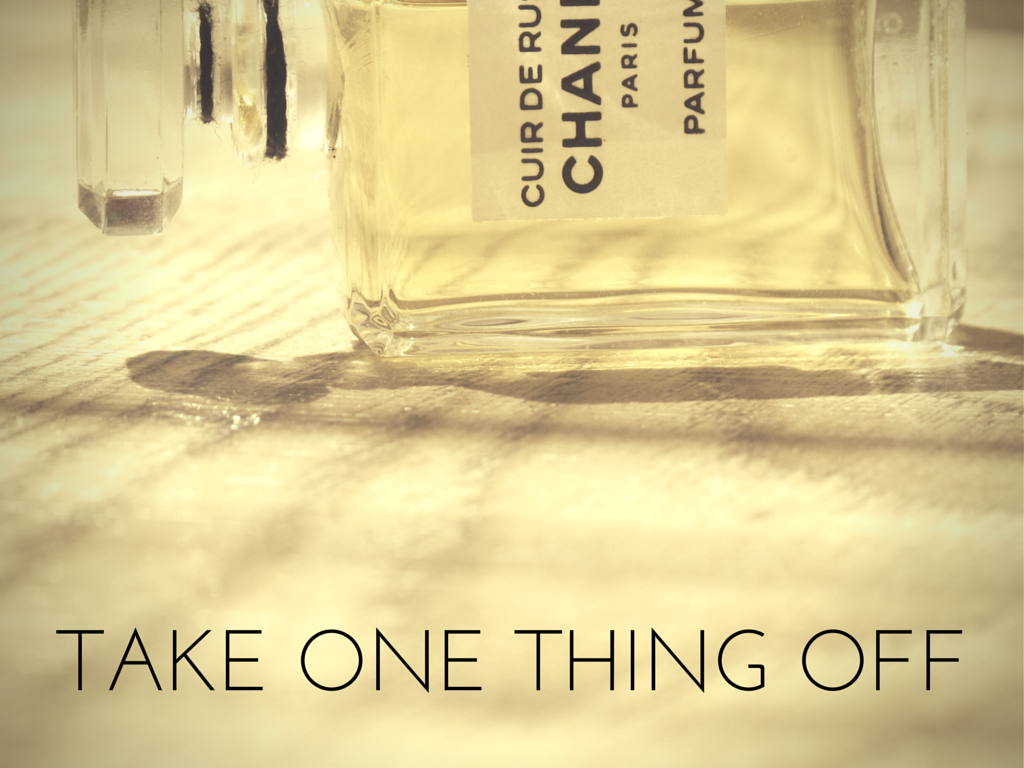
Cuir de Russie is a scent to spray on fabric rather than on your skin, but I have done both to no ill effect (if you have sensitive skin, just obey the damn instructions). This is not the Chanel kind of Cuir de Russie (Russian Leather), but rather, a leather-ish note in a minor key nestled inside a massively cheesy and then baby-powdery deer musk. On the skin, the chalky, innocent pallor of violets peeks out shyly, but not to the extent where you would define the scent as floral (or feminine, or soft, or indeed any of the usual descriptors used for flowers). On fabric, it is the rude, smeary honk of deer musk that dominates, stepping firmly down on the neck of any floral note that threatens to make a break for it.

Given that Cuir de Russie has real deer musk in it, it stands to reason that it is very, very powdery and clings to the inside of the nostrils for days. If you want to know what real deer musk smells like, by the way, please read my article ‘The Murky Matter of Musk‘ here. Many people think that real musk smells foul or fecal. It does not. It does smell intimate, like the morning breath of someone you love, or a clean perineum, but it is more often than not quiet, powdery, and quite sweet, its odor clinging to skin, hair, and fabrics for many days (deer musk was one of the four great animalic fixatives of perfumery).

The musk in Cuir de Russie is somewhat similar to the musk in War and Peace, which I loved for the way its musk was so dry that it smelled like smoke from a just-fired gun (some people interpreted the dryness as baby powder). But Cuir de Russie also doesn’t have the almost pretty smuttiness of the musk in War and Peace, nor its sultry sweetness; it is more butch and a bit rough around the edges, despite the inch-thick layer of powder.   

I like Cuir de Russie but wouldn’t particularly recommend it to a newcomer seeking an entry point to the brand. There’s always the danger that leather fans might roll up and expect leather (crazy, right?) and right now, before the full whack of aging and maceration, Cuir de Russie is mostly musk. Birch tar fans, of which I am one, might be disappointed at its subtlety in CdR – there is zero BBQ meat or ‘just threw a leather jacket on a campfire’ smokiness here. Cuir de Russie is primarily a very rich, powdery musk that ultimately leans a bit too hard on the intrinsic complexity of its naturals to fill in the olfactory blanks.

This is probably going to mature into something stunning, along the lines of Koh-i-Noor. But it is a high risk investment for a bottle of something whose materials might veer off into directions that not even its perfumer can predict with 100% certainty. For those signed up to the rare natural materials pledge, this is is part of the thrill; for the rest of us, contained within the unfixed, mutable nature of these raw materials is the warning that the perfume might also change for the worse.  

Source of Samples: Kindly sent to me free of charge by the brand. My opinion are my own.

Cover Image: Thanapat Pirmphol from Pixabay

Amber Aromatic Balsamic Chypre Citrus Collection Floral Floral Oriental Green Floral Herbal House Exploration Iris Jasmine Musk Orange Blossom Resins Review Rose Round-Ups Spicy Floral Summer Violet White Floral Woods

The Ormonde Jayne Core Collection

15th June 2020


Ormonde Jayne set out its mission and values in its original core collection, and to this day, it remains the standard bearer for the brand. I’ve written about some of the perfumes in the Ormonde Jayne core collection before, but since I’ve been reevaluating much of my collection recently, I thought it might be useful to update or expand upon my thoughts.

In general, my unscientific belief that Ormonde Jayne is the English Chanel bears out. This is solidly-built, almost classical perfumery with a modern elegance derived from strong artistic direction and an admirably no-nonsense approach to the valuable role synthetics play in elevating naturals.

One thing I have noticed this time around is that the literal names – Champaca, Ta’if, Frangipani, and so on – are a Le Labo-ish piece of misdirection, suggestive of a soliflore-ism that simply isn’t there. Words have power, so there will always be those disappointed if the titular ingredient isn’t headlining the whole show. But on the flip side, newcomers to the brand who are able to park their expectations at the door may find their minds blown by the beauty arrived at via more circuitous routes.  


Photo by Maurits Bausenhart on Unsplash

Champaca

Champaca is a scent whose appeal eludes many. But you know what? Half the time it eludes me too. On its bad days, many of the slurs thrown its way worm their way into my head and nag persistently at me with the worry that they might be true – that Champaca is nothing special, that it’s too champaca or not champaca enough, that it’s nondescript, that it’s a dowdy green floral that Calvin Klein’s Truth did better and cheaper. Then there’s its musky loudness, which I always forget until I get called out on it by a colleague who is never backward about coming forward on the subject of my perfume.

But on good days, Champaca is the gently starched air from a bowl of Chinese greens and the damp, permeating nuttiness of brown basmati rice. It makes me think of stepping in from a cold, rainy afternoon in Cork or Limerick into the wood-lined hush of a traditional Japanese restaurant, slightly steamy from condensation and humming with low conversations.

I don’t understand the accusations of tropical yellow flowers or heady ambers in relation to Champaca. It is not even a particularly floral experience. To me, Champaca smells more like the fresh green peel of a Granny Smith apple rinsed with rainwater than a flower. Yes, technically, this all might be unexciting. The scent of an upscale Japanese onsen or spa is never really going to raise the barometer on anyone’s passion. But when I am feeling delicate, or in need of a friendly hand at the small of my back, then Champaca, with its gossamer-light bloom of starchy musks, rice steam, apple peel, watery bamboo, maybe mint, and the environmental exhalations of clean, blond wood, is what I find myself reaching for.


Photo by James Lee on Unsplash

Orris Noir

I originally invested in Orris Noir as a poor man’s substitute for the far more expensive Tsarina, having identified a creamy-milky, anisic iris as the underpinning to both. Now, after taking the time to study both at leisure, I can say that while Tsarina is by far the creamiest, more luxurious ‘white’ leather scent I have ever smelled, in retrospect it doesn’t turn me on as much as Orris Noir, which, although less ‘beautiful’ than Tsarina, has more conversation.

Orris Noir has three or four distinct layers. The first is a doughy iris as dense as under-proved bread dough studded with dried fruit. A couple of years on, I now smell this as a rosy iris bread that’s been soaked in sweet milk, like the egg-rich Easter crown baked once a year in the Balkans. The second layer is an anisic myrrh with the same crystallized texture as found in other myrrh scents such as Myrrhe Ardente, albeit more golden and less overtly itchy-scratchy. The third layer is a minimally smoky cloud of wood or incense that lifts the perfume and makes it radiant (probably a combination of the Iso E Super and the Chinese cedar). Last but not least, there’s a bright, fruity jasmine that fizzes as sweetly as a glass of freshly-poured Coca Cola. Somehow, all of these elements hang together as naturally and as lightly as a silk shawl.

Orris Noir is a fantastic advertisement for the Ormonde Jayne style of building a fragrance, in that it is composed of many different layers, all of them as light as air, but which when laid one on top of another become a dense, velvety mass. I love Orris Noir for what it is – a beguilingly soft spice oriental – rather than hate it for what it is not, i.e., noir or even orris.  Indeed, if Ormonde Jayne had named it something else, Orris Noir might have gained the respect granted to other similarly soft, hazy resinous-floral orientals such as Bois d’Argent (Dior) or Jasmin de Nuit (The Different Company). This is one perfume in my collection that has improved greatly upon (re)acquaintance.


Frangipani Absolute

Frangipani Absolute is at least accurately named, given that it smells more like the absolute than the living flower. The absolute smells green and waxy, like a nubbin of beeswax rolled in matcha powder; the living flower, which I had the opportunity of smelling for the first time in Colombia last summer, smells a bit like jasmine but without the indole and grape, and there is a buttery undertone that I associate with gardenia, minus the heavy bleu cheese aspects.

Frangipani Absolute freshens the waxy-green heft of the absolute by filtering it through lime and linden blossom, creating the impression of hothoused tropical flowers drenched in ice water and the glass partitions thrown open to salty sea air. The brightness of this topnote is undercut later on by the lush creaminess of the living flower, embodied by an accord that smells like a dairy-heavy rice and coconut pudding made out of tuberose petals, with pools of yellow Irish butter rising to the surface. A subtly salty musk and clean cedar hum in the far background, mainly there for support in case the almost unrelenting brightness of the lime-drenched white flowers falters.

Cleverly, the perfumer has made the floral component very peachy, to mimic the peachy jasmine-like aura of the living flower. Frangipani is therefore blessed with a suede-skin note that smells charmingly like the back of a rubber watch on a sweaty child. The scent shifts between these three main accords – green-aqueous-fresh, peachy-rubber, and creamy-buttery-tuberose – without ever getting pulled too far down in one single direction. That’s some balancing act.

Frangipani Absolute is an undeniably beautiful scent, and an interesting take on a flower that often plays second fiddle to more powerful headliners such as gardenia or tuberose. My hesitation on whether it stays in my collection or not stems from several different quarters.

First, the salty, quasi-aquatic musk in the drydown reminds me very much of Lys Méditerranée (Malle), already a wardrobe staple for me, which makes me wonder if it’s not duplicative to have two scents that represent largely the same ‘feel’, i.e., heady white flowers drenched in dew and the salty air rolling in off the ocean. The occasions when I feel the need for this precise combination are few and far between, therefore surely it is redundant for me to have two separate fragrances at the ready when this tight little niche corner of my ‘need’ rears its head.

Second, Frangipani is so pretty and well-presented that it makes me feel slightly uncouth in comparison. Worse, the prettiness reminds me of the golden, solar fruity-floral ‘glazed eyes’ affair that is J ’Adore (Dior), which is fine if you’re wearing something you can pick up from any Sephora or Douglas, but not great if you’re special ordering from a classy niche brand like Ormonde Jayne.

Third, the brightness of the lime-and-peach-hued white flowers feels a little too sharp and insistent at times, like when you neck that syrupy but metallic juice from a tin of canned tropical fruit. In other words, absolutely gorgeous at first but perhaps wearing a little on your nerves towards the last? Along the same lines of complaint (minor, but still), the vanilla tuberose pudding base flirts with heaviness; it clashes a little queasily with the citric acid of the lime, to the extent that it teeters on the precipice of a curdle.  

Out of all the Ormonde Jayne scents I own, Frangipani Absolute is the one I agonize over the most. Do I need it? No. Does its classical (but slightly mainstream) beauty justify me keeping it? Maybe. But the fact that I swing between a yes and a no on this scent, personally, doesn’t mean that it doesn’t rank among the top tier of tropical floral perfumes I’ve had the pleasure of smelling.


Photo by Andriyko Podilnyk on Unsplash

Tolu

Despite not being wowed at first sniff, I have come around to the pleasures of Tolu. It has a bitter, spicy broom note that slices through the golden, balsamic sweetness of amber to create something that is both fresh and heavy, like a flourless chocolate torte that dissolves into fennel dust on the tongue. The kind of thing that invites you to take a second slice, even in summer. I can see this working as a sort of upmarket Dune. In that sense, this is definitely a floral oriental rather than a straight up ‘golden’ amber. It certainly doesn’t maintain a strict tolu balsam fidelity. Rather, Tolu has that sophisticated French floral-sandy feel to it that I associate not only with Dune (Dior) but also with 24, Rue Faubourg (Hermes), albeit with the innovation of a sweetly resinous base to tilt it ever so slightly in the direction of Morocco rather than Paris.

The more I wear Tolu, the more I appreciate its subtlety. I used to prefer the caramelized full frontal of one-the-nose resin bombs and ambers to the almost too quiet, too ‘mixed’ cloud of balsams, orange blossom, and musks represented by Tolu. But Tolu is, I realize, a mood. It is very perfumey meaning it’s been worked and reworked to the same point of abstraction as Coco (Chanel), Dune (Dior) or even Alahine (Teo Cabanel).

Tolu is the quintessential going out perfume for nights along the Riviera, where women and men are beautifully dressed and the warm air smells like a mixture of flowers, salty skin, and the balsamic twang of Mediterranean herbs and umbrella pines lining the promenade. It’s easy to argue that there’s nothing very unusual about Tolu, but what it does, it does extremely well. I will always have space in my wardrobe for this perfumey, French-smelling take on the warm, golden balsams I love rinsed out with flowers, salt, and herbs.   


Photo by Tj Holowaychuk on Unsplash

Tiaré    

For a while, my interest in Ormonde Jayne stopped with OJ Woman, a perfume I’d struggled with for years before finally falling in love with it. That was, until one day a couple of years ago, I fished around in my sample box looking for something crisp and green to go well with a planned walk in a nearby castle grounds with my children and stumbled upon Tiaré.


Its lack of anything truly tiaré-like or tropical puzzled me at first. But I remember marveling at the champagne-like quality of the lime and green notes fizzing gently around the oily but fresh white flower petals. The damp, mossy drydown proved to be a perfect reflection of the elegance of the castle lake and grounds. There is something pinned-up and Victorian in its mien – not entirely me, but rather someone I aspire to be. It was the first sample from the Ormonde Jayne sample set that I drained completely. Whereupon I forgot about it entirely.


Fast forward to Summer 2017, which is when, while sweating our way through the forests and fields of the Sologne and Loiret, I decided that, really, nothing was more French or more crisply elegant than Tiaré, and that I desperately needed a bottle of it. Tiaré would be, I’d decided, my entry point to a new life in France that, although it never actually materialized, was the Big Plan in our family at the time, to the point of flying the kids out to various French cities in an attempt to decide where we would settle.

The firm belief that a life in France calls for a thoroughly ‘French’ perfume (as if my collection wasn’t already 75% made up of so-called French perfume) is why I am now the proud possessor of a totally unnecessary 120mls of Tiaré. (I am perennially guilty of daydreaming my life forward and allowing my purchases to lead the way. In 2018, I was so convinced that I was going to be hired by a British not-for-profit to manage their programs in Myanmar that I got emotionally invested in Indochine by Parfumerie Generale, a perfume based on Burmese thanaka wood. I didn’t get the job, but you bet I bought a bottle of Indochine. I don’t even want to say how many ‘Roman’ perfumes were necessary for me to settle into a new life in Italy.)


Anyway, back to Ireland in these early, post-Coronavirus times and Tiaré, like Cristalle (Chanel), doesn’t really suit the damp, cool conditions. Yet I am loathe to get rid of Tiaré, because, God knows, I will probably need it for when we finally move to France. In which case, I will also need the quintessential cognac-colored leather shopper, very pointy ballet flats, a chic haircut, and a perfectly-cut navy blazer. So, I guess I’d better start shopping now….


Photo by Tobias Tullius on Unsplash

Ormonde Jayne Woman

Woman occupies a place in my personal pantheon of greats, but the route to loving her has not been easy. In fact, I have struggled with this perfume on and off for years. I imagine that, for people like me, with biological sensitivities to certain materials, getting past Woman’s many thorns is like loving someone who is beautiful but difficult.  

Initially, my nose was so sensitive to the combination of woody ambers, sticky pine, and Iso E Super that the only notes I could smell were acrid, burnt, metallic – like burnt fuses and the La Roche Posay medicated acne cream. These unfortunate associations, plus the physical sensation I had of an ice-cold shiv driving into the tender recesses of my brain, are what made me keep my sample of Woman at a safe distance from my nose, wrapped twice in cling film and double-bagged.

Every so often, over the years, I would take out that sample of Woman and tentatively sniff. Now, here’s the strangest thing. As my exposure to the violent woody ambers and brutal Iso E Super used increasingly in niche increased, so too did my tolerance. I don’t mean that I started to like them, but rather that their presence no longer obscured large parts of a composition for me. This meant that perfumes such as Indochine (Parfumerie Generale), Musc Nomade (Annick Goutal), and Ormonde Jayne Woman were now ‘unlocked’ for me. I could smell all parts of these perfumes rather than slivers.

Having said that, progress was gradual. For example, for about six months, although I could smell all parts of Woman, all depth perception dropped off after about an hour or two, leading me to believe (mistakenly) that the perfume had simply stopped in its tracks. I now believe that this was due to the type of woody ambers used, some of which have a curious side effect of making a scent seem to disappear and then come back, over and over again, throughout a day’s wear. Ambroxan can have this odd ‘receding and resurging’ effect too; I sense it most keenly in Amouage Jubilation XXV, which my husband says he wears for other people because he himself cannot smell it after an hour (to his family, it seems quite big and room-filling).

Anyway, the reason I’m waffling on about this odd facet of Woman is that reviews are the little markers we drop along our journey, in the hope that they serve as clues to fellow travelers years down the road, right? I remember smelling Indochine and doing a Google search for something along the lines of ‘Why does Indochine smell like an ice pick to my brain?’ and stumbling across Kafkaesque’s review, which was the first source of answers for me as to why some materials were physically obtrusive to my nose yet imperceptible to others. I felt seen. I hope that someone struggling with Ormonde Jayne Woman finds their way to this review and gets comfort from knowing that they’re not alone, and that there might be a rational explanation for not immediately jiving with one of the most renowned perfumes in modern niche.

There’s light at the end of the tunnel, folks, there really is. Now when I smell Ormonde Woman, I smell the whole forest, the sugared smoke of gingerbread crumbs thrown onto the fire, and the inky mass of woodland violets and hemlock rolled out underfoot, and Scarlett O’ Hara’s dark green velvet gown made out of curtains and fury.

At heart, Ormonde Woman is a nugget of amber surrounded by tall conifers and hemlock, but its mysterious appeal can’t be explained by its notes or even how we think they all hang together. Woman is one of those perfumes you submit to, body and soul, without much hope of ever picking it apart. It took me years to be able to smell all parts of it but now when I wear Ormonde Jayne Woman now, I smell it all, and what I smell makes me breathe deep and easy.


Photo by ORNELLA BINNI on Unsplash

Osmanthus

Osmanthus is not my favorite osmanthus-themed scent in the Ormonde Jayne stable (that would be Qi), but it is surely the prettiest. Osmanthus explores the softly soapy, ‘clean linen’ side of the bloom that marks it out more as vaguely cherry blossom than the pungent fruity apricot suede trope often plumbed in niche.

In fact, aside from a vaguely peachy or apricotty tinge in the topnotes, Osmanthus sidesteps its namesake ingredient and goes for pomelo peel and white petals plunged into ice water and polished to a high shine by radiant aquatic musks. It smells pleasantly cooling, like a tall glass of lemonade or the feel of fresh cotton on hot skin.

Think of it this way; if Qi is an apricot-colored suede pouch filled with green tea, then Osmanthus is a white broderie anglaise sundress and a pair of straw espadrilles strung over one perfectly tan shoulder.

All very nice but running a little too close to one of those Atelier Cologne citrus-and-cotton-musk scents for comfort. I always thought that Osmanthus would smell more ‘at home’ in the form of a body care product than a perfume, and it turns out I was right; the Osmanthus Hair Mist is lovely. Warmer and peachier than the perfume – to my nose at least – the pert, perfumey prettiness of Osmanthus makes more sense to me when spritzed through second day hair. It is still much girlier than I am, but at least in this form, it just creates the manifest lie impression that I am freshly bathed and impeccably groomed.


Photo by Valerie Blanchett on Unsplash

Ta’if

Ta’if is one of those fragrances where I seem to be experiencing something completely different to everyone else. People use the words ‘rich’, ‘dark’, and ‘exotic’ to describe it, which suggests a texture as heavy as velvet – close to Lyric Woman (Amouage) or Portrait of a Lady (Malle). But reality is miles removed. On my skin, Ta’if reads as a sheer peppery mixed floral layered over a musky, dried-fruit base. Neither the advertized dates nor Taifi rose show up for me, or at least not in any form I recognize (when I see ‘Ta’if’ rose, I expect a pop of fiercely spicy, green lemon-and-lime sharpness announcing a tannic rose).

In fact, I’d rank Ta’if alongside Rose Noir (Miller Harris) and Tobacco Rose (Papillon) as rose fragrances that bill themselves as one thing and then deliver another. Clearly, the sheer amount of admiration and positive reviews out there for Ta’if and Tobacco Rose demonstrates that it is possible not only to get over any cognitive dissonance related to their names, but to love them wholeheartedly for themselves.

On me, Ta’if is mostly a blowsy peach and orange blossom chiffonade, interspersed with brief flashes here and there of something that might be interpreted as a tart, green rose. The peachy-powdery feel of the fragrance makes me think of something functional I used to use when I was a teenager, like the Impulse O2 body spray. The dry down is a slightly powdery musk with a streak of dates running through it, which doesn’t tilt too literally in the direction of any one particular note. Rather, one is bathed in a fluffy miasma of musk, fruit, orange blossoms, and caramel that reminds me of some of the prettier ‘pink-smelling’ dry downs in designer perfumery, such as Coco Mademoiselle, or Elie Saab.


Source of samples: Based on a sample set generously gifted to me in 2015 of the niche perfumer store in Dublin, ParfuMarija, I subsequently bought bottles or partials of most of the above. The Osmanthus Hair Mist was kindly gifted to me by Ormonde Jayne PR a couple of weeks ago, along with a Petits Fours box of samples of four of the La Route de la Soie collection sent to me for review (review is upcoming). My opinions are firmly my own.   


Cover Image: Photo by Clem Onojeghuo on Unsplash

Capsule Wardrobe Coffee Floral Floral Oriental Fruity Chypre Gourmand Green Floral Incense Independent Perfumery Leather Lists Musk Oud Patchouli Resins Round-Ups Sandalwood Smoke Vanilla Vetiver Violet Woods

Small But Perfectly Formed: Building a Capsule Perfume Wardrobe with Travel Sizes

9th March 2018

Building a Capsule Perfume Wardrobe: If you had to build, or rebuild, your perfume wardrobe using only travel sizes and minis, could you do it? What would be on your list? 


A couple of questions have been dogging me lately. First, how much perfume do I actually use in a year? And second, if my collection of full bottles was lost or stolen, would it be possible to build a small capsule wardrobe that covers all possible scenarios using only minis and travel sizes, and sticking to a putative budget of +/- $30 per bottle?

Continue Reading

Ambergris Animalic Attars & CPOs Chocolate Gourmand Independent Perfumery Iris Leather Oud Review Round-Ups Sandalwood Suede Violet

Strangelove NYC: silencethesea, meltmyheart, & deadofnight

5th February 2018

 It’s difficult to figure out what Strangelove NYC is, as a brand. If you were to go by appearances alone – the fashionably minimalistic, almost text-free website, the $260 perfume necklaces with 1.25mls of perfume oil, the fact that Helena Christiansen is the brand’s spokesperson – you’d be forgiven for writing these off as perfumes for New York socialites, designed to look banging on the glossy, bronzed neck of a supermodel as she poses for a photo to go with her ITC Top Shelf interview.


But you’d be wrong.


Continue Reading

Floral Oriental Hay Incense Review Violet

Amouage Opus III

1st March 2016

One day, I was coming out of the Book Centre and he was coming out – both of us with our respective friends, and both of us in our Catholic school uniforms. As we passed each other, our eyes met, and I swear to God, we both turned full circle to take a good long look at each other.

I had never before done anything so brazen in my life. We both walked backwards to keep staring at each other as our respective groups pulled apart, and if a movie crew had been there to catch the moment, it would have gone down in history as the most romantic moment in my shabby little life. I was 16. Back at our respective schools after lunch – boys and girls attend separate schools in Ireland – we both busied ourselves with the business of asking around. Who is this person? What do we know of their people? Their pedigree?

The intelligence on him came quickly back – nobody to bother about. I had a certain amount of capital to expend, being reasonably attractive, popular, and brainy, whereas he was an unknown quantity, and certainly not popular.

Didn’t matter – I had to have him. It also didn’t matter that it ended badly, two years down the line. I will never forget the romance of that moment. The first and only time I’ve ever fallen in love on the spot.

Amouage Opus III gives me a similar feeling. I don’t know how it happened, but there’s been a coup de foudre. Our eyes met and I did a full twirl on my heels. So I now send out feelers into the community – is this a worthy one? The early reports are not encouraging. Nice, they say, but save your money. You can do better.

If I were to distill a whole Internet’s worth of reviews of Opus III into two phrases, it would be “overly complex” and “nothing special or notice worthy.” I don’t argue those points – in many ways, Opus III is both overly complex and not at all groundbreaking or original. But – and it’s a big but – it has a lilting, slow-moving beauty to it that spins my heart off like a leaf on an eddy. It’s like being at a crazy party and discovering at the last minute that it’s really the big, silent farmer in the corner that you want to go home with. Opus III has a solid heft that makes me want to curl up inside it.

Reducing it to a category, I’d say that Opus III is a massive violet floriental. But as others have pointed out, the combination of notes is so complex that it’s hard to pick out individual notes. The best I can do is point to the various phases that the fragrance moves through, managed through a series of small, barely perceptible shifts and transitions.

Violet is the moving force here and is present in each permutation. First, we have the violet-hay-earth opening, where the bitter, dirt-covered hay of broom is balanced out by a wet, candied violet accord that comes off like Apres L’Ondee on steroids.

Welling up behind this dewy, bittersweet opening is a bank of mimosa flowers with their fluffy yellow, bitter almond scent. When the mimosa meets the violet, the fragrance shifts from wet hay-violets to a dusty pollen note that makes one think of the yellow dust that covers your fingers when you crumple a buttercup or some other cheerful yellow wildflower.

There is also a dusty heliotrope note here that makes me think of Farnesiana or L’Heure Bleue, but this lacks almost completely the fruity and pastry-like tones of those fragrances. There is a similar weight here, though, like a piece of blue velvet folded over many times.

A tiny accord is hidden here and I catch glimpses of it only sometimes – a dove-grey iris note that colludes with the violets to produce a faint (very faint!) cosmetic undertone. Not exactly lipstick, not exactly powder, but something a little bit frilly.

Under the earth-hay violets and the meadow-pollen violets and the iris-violets, there is another violet combination brewing, and it turns out to be the definitive one – violets and ylang. Ylang introduces a fruity, plasticky edge with a banana-like note to the mix, and when it merges with the violet note, its creamy banana custard voluptuousness becomes corrupted with a strange boot polish note. Could be tar, could be nail polish remover like some reviews mention – I don’t know. But it is a little strange, and more than a little addicting. It’s what draws me back to my sample time and time again, like a druggie.

The spicy orange blossom and jasmine are secondary players here, but they too form their own little pairing with the violets, and add a slight indolic languor to the violets’ dewy, childlike presentation.

Opus III winds up in familiar Amouage territory – a daub of frankincense, dry woods, amber – and while the base is not wildly new or exciting, what it does do is provide a dry, un-sweet landing for the rich floral combinations swirling around the violets. The base is what makes Opus III perfectly unisex, and takes it further away from the two fragrances to which Opus III is most commonly compared, namely L’Heure Bleue and Insolence EDP, which are far more obviously feminine.

Having mentioned the Guerlains, I must mention that I find Opus III to be far more satisfying than either of those fragrances, and more beautiful. I love the rich, earthy hay of the broom, the yellow pollen feel from the mimosa, and the unctuous creamy ylang. It combines – to my nose – the best of L’Heure Bleue, Samsara, and Insolence, and cuts away the fat and the excess fruitiness of those scents.

Opus III smells wholly natural and of this earth – and although it lasts a long time, is longevity is due to a certain richness and heft of fragrance oils rather than muscular woody synthetics. It wears on the skin like a rich, comfortable old velvet cloak.

I rather love it – can you tell? This fragrance moves me. But like any coup de foudre, I’m suspicious of the strength of my feelings. Practically everyone notes that Opus III is not an unusual or extraordinary fragrance in any way. Does that mean that my tastes are pedestrian? Am I a bit of a pleb? Well, probably, and more than just a bit. I can’t quite bring myself to care, though. I want to wear this, and so by God I will.

Hey Opus III! Yeah, you, the hefty farmer with the big red face in the corner! Get your coat – you’ve pulled! Let’s hope this doesn’t end too badly. My judgment in these matters is famously terrible.