Browsing Category

Sandalwood

Balsamic Citrus Coffee Collection Cult of Raw Materials Floral Fougere Green Floral Incense Independent Perfumery Iris Jasmine Lavender Leather Musk Oriental Osmanthus Oud Resins Review Rose Round-Ups Saffron Sandalwood Smoke Spice Spicy Floral Thoughts Violet White Floral Woods

Areej Le Doré Agar de Noir, Musk Lave, Cuir de Russie, Grandenia, & Santal Galore

28th September 2020

The challenge for any reviewer in reviewing the Areej Le Doré releases is that (a) either you’re late and the perfumes you’re writing about are no longer available to buy, or (b) you’re on time for a full bottle release, but you are talking only to the group of three to six hundred people that are buying them, a tiny circle of devotees that seems to get tighter and more closed-off with each successive release from the house.

I can certainly see why many people in perfume-land might be attracted by the fantastic raw materials on offer by Areej Le Doré but turned off by the feverish fandom that has sprung up around the brand. If you’re not willing to set your timer to bumfuck o’ clock Thailand time or duke it out with the scalpers, then the whole thing can feel like the most fearsome clique from high school. And when anyone feels excluded, there is the natural tendency to grumble to yourself, “Well, if I’m not in, then I’m sure as hell out…of this hot, culty mess.”   

While this is certainly not a problem for Areej Le Doré itself – selling everything you produce is the dream, after all – I wonder if the lack of new entrants into the inner circle of devotees represents a problem over the longer term. Fresh perspectives on your work are essential whether you are making a car or a perfume because they stop you from drowning in the reflecting pool of constant and uncritical adoration. They also safeguard the perfumer against the danger of becoming essentially a private label or custom outfit dancing to the whim of a small but intimidatingly vocal group of buyers, none of whom I’d particularly like to meet in a dark alley. Just kidding, just kidding (sort of).

Anyway, this review goes out to anyone who has an interest in Areej Le Doré fragrances but has, for one reason or another, avoided actually buying them, either in sample or full bottle form. This might be someone who loves natural raw materials, for example, or someone who loves and misses the rich orientals of yesteryear that boasted real sandalwood or expensive floral absolutes. Or it might be people who are into perfumes in general and have the money to invest in the really good examples, but zero stomach for the clusterfuckery around the brand itself. If that’s you, and you’re reading right now, then let me tell you that this particular Areej Le Doré collection is the one to dip your toes into, if you were reluctant before.

Here’s why I think this collection is a good entry point for newcomers to Areej Le Doré. First, the perfumes in this collection are noticeably lighter and more refined than previous cycles, making them easier and more pleasant to wear, especially for women.

Second, none of the perfumes in this collection are marred by the heavy, almost seedy animalic undertone that has dogged other collections. For example, I loved Plumeria de Orris from one of the previous collections, however, once the buttery orris and frangipani burned off, the fragrance was dragged under the gutters by a honeyed civet or musk that smelled disturbingly like dried saliva. Koh-i-Noor was my absolute favorite of a previous generation, but a greasy costus-laden musk gave it an old-man’s-crotch vibe that I couldn’t quite shake. But in this collection, even the musk- and oud-heavy perfumes are not overly heavy, greasy, or saliva-ish.

Third, and probably the most important one: I think that this collection is Russian Adam’s best yet. If you don’t know already, each Areej Le Doré collection usually contains variations on a basic line-up of a (i) musk (usually natural deer musk-based), (ii) an oud, (iii) a humongous mixed oriental floral, (iv) a ‘soliflore’, (v) an ambergris, and/or (vi) a leather or sandalwood. Although there doesn’t seem to be an ambergris-focused scent this time around, the others are all either superlative or really good examples of their respective ‘theme’. If you love natural raw materials like oud and sandalwood, then pull up a chair: brands like Areej Le Doré are the last holdout for exquisite raw materials in a world that is increasingly sanitized and lab-molecule-dependent.   

Image by DEZALB from Pixabay

Rather confusingly, Santal Galore is the kaleidoscopic floral nag champa extravaganza this time around, rather than the sandalwood you might be expecting (which is actually to be found in the equally-confusingly-named Musk Lave). My vial leaked in transit, but after smashing it open and swabbing the gooey remnants onto my skin with a Q-Tip, I can tell you that this is the one I’d crawl over hot coals to smell again. Oh God, grant me the unlimited funds to buy the few perfumes that smell as good as this. It opens with a big, creamy swirl of aromas that you imagine emanating from a Persian carpet or a well-oiled antique from a souk, soaked in multiple generations’ worth of glossy, fruity Cambodi oud oils, rosy-sandal attars, and the sweetness of smoke from decades of burning Indian Chandan sticks and barkhour.

This perfume carries that full romantic sweep of Orientalia in its bosom that Westerners like me find so irresistible but that usually come out mawkish and kind of cheap-smelling. Santal Galore deftly matches the slightly gummy-floral sweetness of nag champa with a savory cream cheese background that seems to encompass the smoked Easter Ham aroma of guaiacol and a salty-minty oakmoss. Eventually winding down to the lovely smell of a freshly-struck match, Santal Galore performs the same trick as Santal de Mysore in that it is suggestive of the spiced warmth of real sandalwood without smelling directly of it.   

For my personal taste, this is the best floral/woody/musky thing that Areej Le Doré has ever done. There are no analogs in the commercial or niche world, so it’s difficult to draw comparisons that will make sense to those new to the brand. But if pushed, I would mention Le Maroc Pour Elle (Tauer Perfumes) or Daphne (Comme des Garcons) as scents that occupy the same scentoverse ideologically speaking.  Less helpfully perhaps for newcomers, but more so for people who have bought into the brand since its inception, Santal Galore is roughly in the same ballpark as Ottoman Empire, with which it shares a similar nag champa floral richness, and Koh-I-Noor, for that same almost claustrophobic rush of dense, heavily-packed-in floral notes and that texture that is both creamy and powdery (although Santal Galore is not as animalic or as costus-laden).  It has been a while, but there could also be a line drawn to the sharp, almost oily Flux de Fleurs, though Santal Galore is a far gentler, rounder affair.

Image by Couleur from Pixabay

Musk Lave has one of the best real sandalwood finishes I have smelled outside of attar and mukhallat perfumery. For fans of real sandalwood, the real treasure lies here, and not in Santal Galore. But be aware that this is the type of musky, spicy, masculine-leaning sandalwood that used to feature in high quality ‘barbershop’ fougères before Indian sandalwood became generally unavailable to commercial perfumery in the late eighties, and before entire carpets of beige, sweetish tonka bean were conscripted to fill the gap.

In other words, though it certainly smells rich and incensey, like all good sandalwood should, this sandalwood is the handsome, rugged version that smells more like good wood and bay rum spices than a creamy dessert that will send you into a stupor. The invigorating sparkle of the sandalwood is beefed up by a nice lump of labdanum, so you get the full balance of aromatic-dry and sweet-incensey that the very best examples of sandalwood possess, e.g., the Mysore 1984 by Ensar Oud, which, because it is aged, has developed that rich, incensey sonic boom ‘loudness of voice’ that would be most unusual for a pure sandalwood more freshly distilled.

Winding back to the start, Musk Lave opens with a fresh, powdery lemon and lavender accord, which would be a naturally lean kind of thing were it not for the immediate upswell of an unctuously buttery musk or tonka that adds richness, like a pat of yellow Irish butter melted over a salad. Think Jicky but with real sandalwood and musk dialled in for that naughty ‘skin musk’ feel, writing over the rather sharp, sometimes foul-smelling synthetic civet of the Guerlain. Given that Jicky is my favorite fragrance in the world, hopefully you’ll take my word for it that Musk Lave is the upgrade nobody knew was in the wings but immediately presses the install button on.

Photo by Johannes Plenio on Unsplash

Agar de Noir (can’t you just feel Luca Turin squirming?) is the oud in the collection and is quite the departure for Russian Adam for two reasons. First, although the oud is the real deal, it does not smell like any one particular terroir or style of oud (as opposed to Antiquity, which smelled almost entirely of the beautiful Cambodi oud oil used) but rather presents as a generalized picture of ‘oudiness’ that’s been cleaned up for public consumption. So, you get the characteristic smell of damp, fermenting wood chips and the dusty scent of old wood varnish, but not the shriekingly sour hay and leather highnotes of a Hindi, or the hyper-treacly stickiness of a Trat, or the wolf-fur wooliness and ambergris-saltiness of a Chinese oud. The oud is there merely as a signpost planted in the scent to suck you deep into the shadows, where the equally dusty darkness of ground coffee is waiting, deepening the gloom.

The opening reminds me more of Borneo 1834 (Serge Lutens) than any of the other Areej Le Dore oud-dominated fragrances, due to that ‘brown’ dustiness; Oud Luwak also used coffee as a note, but it felt much more like an oud-focused affair than Agar de Noir, which feels more floral. It does share with Oud Luwak that dark, airy elegance of structure – like an expensive bar of chocolate that makes a satisfyingly clean ‘snap’ noise when you break it. The gloom of these brown notes has been lifted by the chalky brightness of violets, which create a sort of pastel-colored clearing in the Agar de Noir forest. I like the civilizing effect the violets exert on the oud: they add an unexpected foppish lightness that could be read, in some lights, as ‘dandified’. This tangy, balmy oud-and-violet accord makes what is essentially a floral leather sort of thing – like Jolie Madame (Balmain) with an oudy twist.

The second way in which I find Agar de Noir a departure is in its overall lightness of feel. The light-on-dark, violet-on-oud-leather thing is super elegant while it lasts but after two hours, the show is essentially over, save for the cinder toffee-like sweetness of the labdanum that brings up the rear.

The labdanum persists for hours beyond this, of course – it is a traditional basenote for a reason and has been the finish of choice for Russian Adam in all his oud blends after Oud Zen. But compared to Russian Oud and Oud Piccante, the labdanum absolute used here is of a much lighter weight – a judicious smear of incensey, golden toffee, but unencumbered by the sheep fat unctuousness of the labdanum in Oud Piccante or the chocolatey amberiness in Russian Oud. Personally, this ‘middle’ weight of labdanum suits me just fine; Oud Piccante is too savory-fatty for my tastes, and Russian Oud too gourmand. Agar de Noir is lighter, shorter, more attenuated, and is all the better for it. However, oud heads who want their oud to be perceptible past the third hour mark, Agar de Noir might be one sacrifice too far in the name of elegance.

For anyone not already inducted into the Areej Le Doré oud hall of fame mentioned here, just picture an oudified Jolie Madame and you’re on the right track. I think this would also be a particularly friendly oud for beginners, and because of its soft, ‘thin’ floral mien that restrains the brutishness of the oud, it may also be a better pick for women. Dark, dapper, and mysterious in a Victorian gentle-person kind of way, Agar de Noir is my pick of the Areej ouds, barring Oud Zen, which was similarly minimalist and ‘legible’.         

Image by Pitsch from Pixabay

Grandenia suggests that it might be going big on the famously creamy, mushroomy lushness of gardenia, but this is not the case. Rather, this is a tightly-wound, stiffly-starched green floral that starts out at the data point of a citrusy-piney frankincense – a resin that here smells like a freshly-stripped piece of Silver Birch – and winds up in Chandrika soap territory.

I find this pinched, freshly-scrubbed sort of floral a chore to wear, but it may appeal to people who like Antonia by Puredistance. I also want to acknowledge that this would be a good white floral for men, as it is completely devoid of the soft, candied creaminess and tinned-fruit syrupiness of most white florals. It is clipped and pure; the sort of thing to stiffen the spine. A very good wood accord develops in the base that smells more like sandalwood soap than oud or sandalwood per se. And then, finally, in the last gasps – a ghostly imprint of gardenia, with that slightly glassy, freshly-cut-mushroom quality it shares with myrrh.

Image by HG-Fotografie from Pixabay

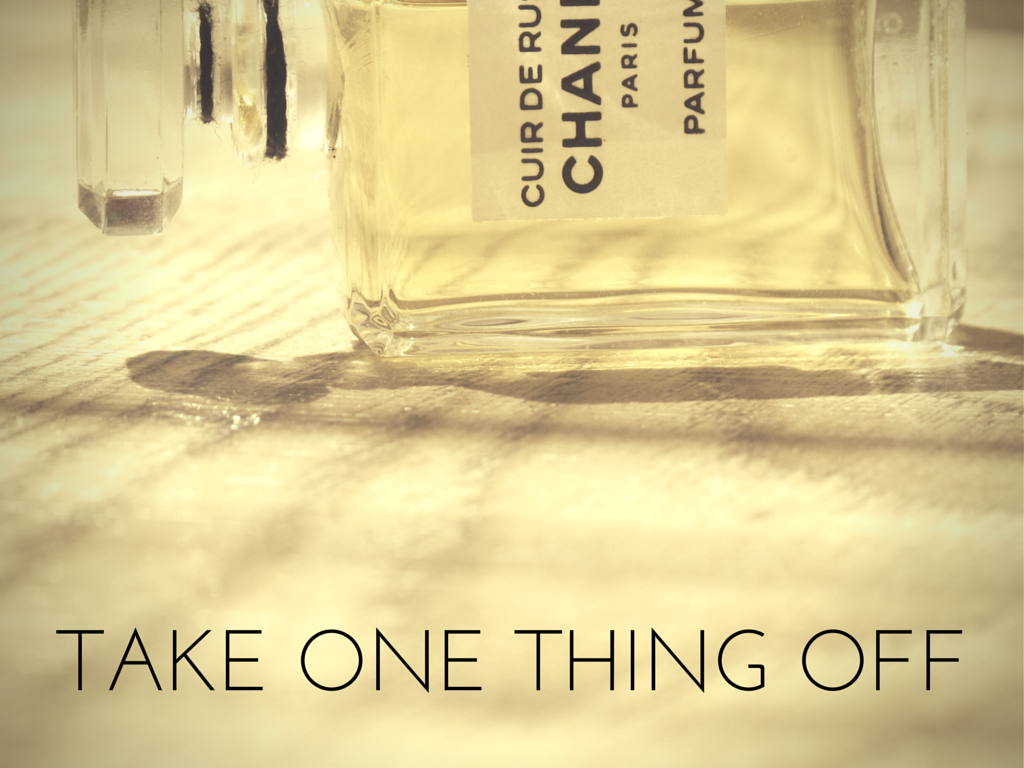
Cuir de Russie is a scent to spray on fabric rather than on your skin, but I have done both to no ill effect (if you have sensitive skin, just obey the damn instructions). This is not the Chanel kind of Cuir de Russie (Russian Leather), but rather, a leather-ish note in a minor key nestled inside a massively cheesy and then baby-powdery deer musk. On the skin, the chalky, innocent pallor of violets peeks out shyly, but not to the extent where you would define the scent as floral (or feminine, or soft, or indeed any of the usual descriptors used for flowers). On fabric, it is the rude, smeary honk of deer musk that dominates, stepping firmly down on the neck of any floral note that threatens to make a break for it.

Given that Cuir de Russie has real deer musk in it, it stands to reason that it is very, very powdery and clings to the inside of the nostrils for days. If you want to know what real deer musk smells like, by the way, please read my article ‘The Murky Matter of Musk‘ here. Many people think that real musk smells foul or fecal. It does not. It does smell intimate, like the morning breath of someone you love, or a clean perineum, but it is more often than not quiet, powdery, and quite sweet, its odor clinging to skin, hair, and fabrics for many days (deer musk was one of the four great animalic fixatives of perfumery).

The musk in Cuir de Russie is somewhat similar to the musk in War and Peace, which I loved for the way its musk was so dry that it smelled like smoke from a just-fired gun (some people interpreted the dryness as baby powder). But Cuir de Russie also doesn’t have the almost pretty smuttiness of the musk in War and Peace, nor its sultry sweetness; it is more butch and a bit rough around the edges, despite the inch-thick layer of powder.   

I like Cuir de Russie but wouldn’t particularly recommend it to a newcomer seeking an entry point to the brand. There’s always the danger that leather fans might roll up and expect leather (crazy, right?) and right now, before the full whack of aging and maceration, Cuir de Russie is mostly musk. Birch tar fans, of which I am one, might be disappointed at its subtlety in CdR – there is zero BBQ meat or ‘just threw a leather jacket on a campfire’ smokiness here. Cuir de Russie is primarily a very rich, powdery musk that ultimately leans a bit too hard on the intrinsic complexity of its naturals to fill in the olfactory blanks.

This is probably going to mature into something stunning, along the lines of Koh-i-Noor. But it is a high risk investment for a bottle of something whose materials might veer off into directions that not even its perfumer can predict with 100% certainty. For those signed up to the rare natural materials pledge, this is is part of the thrill; for the rest of us, contained within the unfixed, mutable nature of these raw materials is the warning that the perfume might also change for the worse.  

Source of Samples: Kindly sent to me free of charge by the brand. My opinion are my own.

Cover Image: Thanapat Pirmphol from Pixabay

Amber Animalic Balsamic Chocolate Honey Incense Independent Perfumery Iris Leather Oriental Patchouli Resins Review Sandalwood Spice Tobacco Tonka

Sticky Fingers by Francesca Bianchi

19th August 2020

The more I wear Sticky Fingers by Francesca Bianchi, the more I’m convinced it is the Bengale Rouge of the Bianchi line, by which I mean a deliciously thicc n’ fuzzy oriental that’s characterful without being challenging – the much-loved woolly sweater your hand reaches for over the stark, uncompromising Ann Demeulemeester gilet you bought in a factory sale but could never figure out where the arm holes were. The thing these perfumes have in common is their sense of familiarity – they remind you (vaguely) of scents you already know and love. They wear like old friends even if you’ve just been introduced.

Just like Bengale Rouge is a more ‘people-pleasing’ option for people who would never wear Salome, Sticky Fingers is the perfect ‘out’ for people who want to own a Bianchi but find Sex and The Sea or The Lover’s Tale too heavy on the harsh orris-leather accord that has become the Bianchi calling card. That’s not to say that there’s none of Francesca in this perfume, because women with strong personalities always spill over into their art. You’d know, for example, that Sticky Fingers is a Bianchi creation as surely as you can tell Bengale Rouge is a Liz Moores one.

But Sticky Fingers is not going to ruffle any feathers. It is a cosy, feel-good diorama of Francesca Bianchi’s back catalogue with most of the hard edges sanded down and its already duvet-thick volume fluffed up by a mille-feuille of chocolatey patchouli, resins, amber, tonka bean, and vanilla.  

My own sticky fingers hover over the ‘buy’ button on Sticky Fingers mostly for the last two thirds of its life, which is when it turns into that combination of smells perfume lovers know as ‘sweater mélange’ – that sweet, lived-in aroma of a fabric like wool or coat collar or seatbelt exhaling, like a sigh, the breath of multiple perfumes last worn God knows when. Or that lovely and as-individual-as-a-fingerprint nuclear cloud that rushes up at you when you open a box of your favorite perfumes or cosmetics.

To wit, Sticky Fingers smells like the heady, third-day fug imprinted on my bathrobe after several days of wearing some of Francesca Bianchi’s other perfumes; especially The Dark Side with its honeyed resins, The Lover’s Tale with its sharp leather, and Lost in Heaven for its simultaneously urinous and sherbety civet-iris accord that is practically the Bianchi DNA. Yet Sticky Fingers is much softer and gauzier than any of these. It’s like all of these perfumes mingling together and blown in at you through an air vent from another room.  

Digging down into the detail, there are muffled echoes of something of the choco-wheat-cereal notes from indie perfumes of the last few years (like Ummagumma by Bruno Fazzolari, Café Cacao by En Voyage, or Amber Chocolate by Abdes Salaam Attar), but also a spicy tobacco gingerbread (Tan d’Epices), and a thick ‘white’ note like sandalwood creamed with benzoin (Santal Blush perhaps). I sprayed some Ta’if (Ormonde Jayne) over the tail end of Sticky Fingers once and could have sworn to the presence of smoky, caramelized marshmallow (Amber Absolute by Tom Ford). To be clear, Sticky Fingers doesn’t smell like any one of these perfumes. It’s just a delicious, jumbled up funk of rich woody or resinous orientals that have been worn at some point in the past two or three weeks, and have left an indelible, if undefined, impression.

In essence, Sticky Fingers is a patchouli perfume. But through a glass darkly. Think of the patchouli as the soloist leading the charge in a huge orchestra, drawing in supporting riffs from the strings and the bass until the music swells up from a hundred different sources, creating an incredibly rich, harmonious sound that fills all the air pockets in the room. The patchouli starts out solo, a musty, stale, and fruity rendition of pure earth. But almost immediately it calls in the high notes of the string section, in the form of those acidulated orris-leather tones of the Bianchi DNA, and to counter that, the bass tones of grainy tobacco leaf, shredded into tiny pieces and soaked in a glass of cold, floral-anisic Chinese tea. This combination of notes and ‘sounds’ has the effect of roughing up the patchouli, turning it into a hessian cloth accord of earth, stewed tea, and tobacco, back-lit by the yellow streak of ureic civet-iris that runs through Bianchi’s work like battery acid.  

This opening act is attention-catching but, focused on two or three accords that ride bullishly over everything else, it feels like we are all waiting this part out until the quieter, richer sound of the rest of the orchestra can spot an opening and rise to fill it. Eventually this happens, a whole chorus of dusty spices and sandblasted resins and micas ‘blooming’ in unison, softening the sharp edges of the Bianchi iris and blurring the outline of the patchouli. If I like the scent thus far, then I start to love it now, just as the central accord thickens up like a custard with the addition of tonka, sandalwood, vanilla, and tons of sparkly resin. This is when the perfume becomes a comforting ‘sweater mélange’.

The older the get, the more I enjoy scents that envelop me in a billowing cloud of warm, toasty goodness powered by the natural expansiveness of their resins, flowers, or sandalwood, as opposed to the fake radiance of Ambroxan or the forced volume achieved by over-spraying.  The most naturally ‘wafty’ fragrances in my arsenal are the big balsamic orientals like L’Heure Bleue parfum (Guerlain), Opus 1144 (UNUM), Bengale Rouge (Papillon), Coromandel (Chanel), Farnesiana (Caron), and Taklamakan (777 SHL), which wear like a delicious ‘gold-brown’ scent cloud that moves with me, like Pig-Pen from Peanuts. Sticky Fingers – welcome to the fold.

Source of Sample: Free with my purchase of Under My Skin from the Francesca Bianchi website.

Photo by Dmitriy Frantsev on Unsplash

Aldehydes Ambergris Aromatic Balsamic Citrus Collection Floral Floral Oriental Fougere Green Herbal Iris Leather Osmanthus Oud Review Rose Sandalwood Spice Spicy Floral Suede Tea Tobacco Woods

Ormonde Jayne Four Corners of the Earth Collection

6th May 2020

Nawab of Oudh

Stupidly, I ignored this one for the longest time, believing it to be yet another Westernized take on oud. Guess what? It isn’t. The penny dropped just as I ran out of money, or at least the willingness to spend more than that €1.2 per ml limit Luca Turin originally advised us to stop at. This means that I don’t, and never will, own a bottle of Nawab of Oudh, which is terrible because this thing brings me to my knees.

But let’s make some lemonade out of dem lemons. I like to pretend that my bottle of Nawab of Oudh is hanging out at Roma Store, a small profumeria in Trastevere I frequent. Every month, I take a leisurely stroll down the Tiber to visit with the bottle of Nawab of Oudh the shop is kindly (but obliviously) hosting for me and douse myself liberally in its glorious juice. Then I walk back home, sniffing myself with a huge, dopey grin on my face, oblivious to how I look to passers-by.

Describing what Nawab of Oudh smells like is like trying to catch butterflies with a teaspoon. It has that gauzy, dizzying abstraction characteristic of so many Ormonde Jayne standouts like Black Gold and Rose Gold, and features – as far as I can tell – peppery spice, juicy mandarin, champagne-like aldehydes, roses, sandalwood, and a mass of creamy floral notes.

But I’m not sure any notes list adequately conveys the fierce joy of this scent. Better to say instead that this perfume gives you that Saturday morning feeling of good things to come – a crisply folded newspaper, a fresh pot of coffee, warm bread rolls, cold Irish butter, and a day of leisure stretching out in front of you like a cat. It smells like sunshine in a loved one’s hair and a just-cancelled meeting. 

Photo by Florencia Potter on Unsplash

There is a point at the center of this fragrance that makes me think perfumer Geza Schoen might be playing around with an old Roucel-ian template of a green-ish magnolia bathed in a silky bath of citrus, honey, roses, and heavy cream (last seen in Roucel’s Guerlain’s L’Instant for Women and Rochas’ Tocade). The magnolia is viewed obliquely here, through a haze of spicy pepper, pimiento, cardamom, and cinnamon-dusted rose, but it’s definitely got some presence.

I love that when I spray it heavily, Nawab of Oudh coats the back of my hand with an aggressively oily sheen but then immediately radiates off into the air with an aldehydic swagger. Despite the name, there is little oud to speak of here, aside from a slightly sour, leathery tint to the soapy sandalwood in the base. I love this fragrance and believe it to be one of the most elegant and accomplished spicy oriental-florals that a woman or a man could wear.

Tsarina

Tsarina is a creamy, anisic floral suede that was the object of my affection obsession for much of 2016. It is a decidedly cool-toned fragrance; if it were an eyeshadow palette, Tsarina would be all dove greys and silvery taupes in the sort of satin finish that makes your eyelids appear expensively buffed. If it were a textile, it would be a length of raw silk, dotted with nubbins of texture that ride up pleasurably against the palm of your hand. Did I crack under the pressure of desire? Of course I did. It was 2016 and I was still spending money on perfume like they were bottles of H2O.

Photo by Ethan Bodnar on Unsplash

But even though I split a bottle with a friend during the famous Ormonde Jayne Black Friday event, Tsarina turned out to be an eye-wateringly expensive purchase. Not so much because of the price I paid, but because I never wore it as much as I thought I would. And a perfume sitting unloved in a collection is the costliest cost of all.

Three years on, I’m trying to understand my sudden and brutal withdrawal of affection for Tsarina. I suspect it covers too much of the same ground as Orris Noir (also by Ormonde Jayne), with its anise-tinted iris and myrrh, and maybe also L’Heure Bleue, with its medicinal heliotrope-iris tandem, for me to get any relief from this nagging cognitive dissonance. There’s also some overlap with the plasticky, clove-spiced benzoin creaminess of Guerlain Lui, which I also (somehow) own. But there’s also the fact that, for the 2020 me, Tsarina is now too rich, too claustrophobic.  

But it is beautiful. Tsarina opens with the characteristic Ormonde Jayne blur of uplifting citrus and pepper notes, fueled by aldehydes, before quickly settling into that anisic, peppered ‘cream of wheat’ milkiness I associate with floral sandalwoods like Dries Van Noten (Frederic Malle) and the Pheromone attars produced by both Sharif LaRoche and Abdes Salaam Attar. Ormonde Jayne’s Vanille d’Iris, I find, recycles the same core of buttery iris suede, stripping it way back, and adding a dollop of plasticky vanilla to dull its ethereal gleam. As for Tsarina, once the first burst of spicy freshness dies away, both I and the fragrance miss it dearly.

Tsarina is soft and stodgy, like a bowl of porridge. Its lack of definition is probably why I sought it out so insistently the first time around, because I’m drawn to the boneless torpor of cream-sodden florals with little in the way of ballast propping them up. I find them comforting. However, for my money, stuff like Alamut by Lorenzo Villoresi – an exotic rice pudding-custard made out of tuberose, nag champa, and lots of civety sandalwood – satisfies the same itch and at less expense.

Of course, I didn’t know Alamut back then. Sure, if I could go back and tell my 2016 self that some of the perfumes I am passionate about would be rendered obsolete down the line by perfumes I was yet to smell, then I might have chosen differently. But I’m letting myself off the hook here. Tsarina is still a beautiful perfume judged against any parameter. It’s just that my 2020 self wants Nawab of Oudh more.

Qi

Qi is constructed to make no great statement thus offending no one. Lest you think I’m being bitchy, that sentence comes from the Ormonde Jayne official copy!

Normally, my shackles rise when I hear anyone describing a perfume as ‘inoffensive’ or, worse (shudder), ‘mass-pleasing’, because if that’s the end goal, then there’s no need to spend $425+ on a bottle of perfume when you can spend $5 on a bottle of that chocolatey, oudy Axe spray my husband is invariably wearing whenever I complement him on his lovely smell.  

But honestly, Ormonde Jayne is onto something here. Osmanthus – for those not overly familiar with it – is a material that shares a rudely pungent quality with Hindi oud oil, black tea, and leather, all materials that have undergone some kind of process like soaking in water, tanning or smoking that lend them a distinctly fermented facet. I’m a fan of the fermented, but the uninitiated might find this particular floral note a challenge. The trick is to trim back the ruder, earthier facets of osmanthus absolute, and to capture only the fresh, pretty notes of the flower smelled straight from the plant.

And that’s exactly what Qi does. It is a super clean, bright take on osmanthus – a glowy little pop of apricot over soapy musks and fresh green tea (maté) that create enough of an illusion of leather to catch at the back of your throat. The osmanthus note is sustained for a remarkably long time, the fresh tea and soft leather notes soaked in an indelible peach or apricot ink. There’s also a whiff of clean rubber tubing – a pleasant inevitability whenever tea and osmanthus share the same space.

Photo by Ethan Bodnar on Unsplash

Despite the complex array of notes, though, Qi smells charmingly simple and ‘honest’. I can see this elegant glass of green tea, aromatized gently with a slice of apricot, appealing to many people. Ormonde Jayne is a rare house that knows what to do with osmanthus, and for me, Qi is its shining example. I prefer it to the also excellent Passionate Love, which is constructed along similar lines as Qi, but duskier, with a mineralic vetiver-and-Iso-E-Super drydown I’m less fond of.

Montabaco

An interesting fragrance. Revolving around a dank, green sage-tobacco accord that’s been lightened and spaced out by tons of Iso E Super, Montabaco is both dark-smelling and airy. Despite the distinctly aftershavey, fougère-like aspect to Montabaco that tags it as masculine, I have enjoyed smelling this on my skin and trying to break it down.

It’s worth mentioning that the two or three times I’ve worn this, my nine-year old son has sought me out to tell me that I smell really good. That makes me wonder if it’s just that Montabaco has huge sillage (thanks to the Iso E Super) or if there’s something in this fragrance that calls out to males.

I know that I’m not best placed to evaluate. When I smell a ‘classic male aftershave’ accord, something in the analysis part of my brain shuts down, blanking out the individual notes or components of the scent beyond the first and all-encompassing impression of ‘maleness’. But even to me, it’s clear that Montabaco is several pay grades above something like Brut or Azzaro Pour Homme.

And am I picking up on a sleight of hand here? With its flourishes of dry green herbs, ‘clovey’ spicing, and cleansing bay leaf, the central accord smells far more like cedarwood to me than tobacco leaf. This impression is underlined by a dollop of powdery amber that adds no sweetness but instead a pleasantly dustiness that softens the mealy bitterness of the cedarwood (or tobacco).

Photo by Catalin Pateo on Unsplash

We are spared the intensely syrupy dried fruit and cacao notes that usually accompany tobacco. In fact, the vermouth-like dryness of the tobacco leaf in Montabaco reminds me very much of Miller Harris’ Feuilles de Tabac, pumped up with the creamy cedarwood baritone of Creed’s Royal Oud and fleshed out with a traditional barbershop fougère’s worth of spices and herbs. I liked Royal Oud and Feuilles de Tabac well enough, but Montabaco is more nuanced, more complex. If any of my male relatives were in the market for an interesting interpretation of a traditional tobacco or cedarwood-heavy fougère, and had the funds to go niche, I’d definitely point them in the direction of Montabaco.  

Source of Samples: The staff at the Dublin niche perfume store ‘ParfuMarija’ generously included a sample set of the Ormonde Jayne house as a gift with purchase in 2016. The set included samples of the Four Corners of the World collection.

 Photo by Dariusz Sankowski on Unsplash   

Ambergris Animalic Aromatic Balsamic Chocolate Independent Perfumery Review Sandalwood Smoke Spice Woods

Eris Parfums Mxxx.

7th February 2020

Mxxx. by Eris Parfums is an almost embarrassingly sexual scent – the result, I imagine, of an experiment to cross breed the silvery, driftwood aroma of a far-off beach bonfire with the boudoir-ish scent of smoked butter, incense ash, and the baritone subwoofer of 88% cocoa powder.

I really liked the original Mx., which, with its creamy-spicy-woody character (à la Cadjméré by Parfumerie Generale), was a bright and casual affair. The innovation here, with Mxxx., is that Barbara Hermann and her perfumer for Eris Parfums, Antoine Lie, decided to up the stakes by adding a large dose of 7% natural ambergris tincture, cacao from Trinidad, and hyraceum tincture to the formula. The difference this has made to the bones of the perfume is striking. It’s not just that the natural ambergris has made the perfume warmer, siltier, more animalic – which it has – but that the furniture has been rearranged in a way that makes me think it’s another room entirely.

Each time I wear Mxxx., it overwrites my memory of the original a little bit more. I remember the original smelling like sandalwood, if sandalwood was made of pine, milk, hazelnuts, and chocolate oranges – sexy in a tousled, white cotton t-shirt kind of way. Mx. was firmly unisex, or just ever so slightly feminine-leaning, and clearly a perfume for daylight hours.

Mxxx., by contrast, is a smeary creature of the night and more emphatically masculine. The bright chocolate-orange sandalwood of the original has been replaced with a smoky butter note, which is held in place by an quasi-fecal cedarwood with bitter, chocolatey undertones.

In its total effect, Mxxx. still smells like sandalwood to me, but a much earthier, more aromatic version than the milky ‘saffron orange’ sweetness of the original. The butter-cacao undertone here is unctuous but roughened with a kitten’s lick of grey sea salt that catches at your throat and stops the scent from smelling overtly gourmand. The incense, subtle spices, and the musky cedarwood give the scent a dry, gauzy texture, like ash from a wood fire blown into the air.   

Animalic? Technically, yes, I suppose it is. But Mxxx. isn’t one of those fragrances that sacrifices smoothness or wearability at the altar of animalic authenticity. I think we’ve all smelled scents where castoreum smells like the pissiest, driest, most urine-soaked piece of leather imaginable, or where their natural ambergris smells alarmingly like halitosis, horse dander, and low-tide harbor. While I admire those kind of scents for pushing boundaries, and for testing our tolerance for the unabridged ‘realness’ of animal secretions at their rawest, they sure as hell can be a trial to wear.

Give me something like Mxxx. any day. It smells great, and sexy in a skin-like kind of way, but never like something that’s playing a game of chicken with me. It really isn’t any more challenging or animalic than, say, the full-bodied, all-original-woods-and-civet-intact lasciviousness of 1980s-1990s perfume, like Samsara (Guerlain) or Ubar (Amouage) or Creed’s fantastic Jasmin Impératrice Eugenie (not that Mxxx. smells like these, particularly; I’m just referring to a similar ‘generosity’ in their proportions of thick, pongy-sandalwoody-French-perfumeyness).   

The smoked butter note is, for me, the primary animalic element. It smells a bit fatty and skin-like, at first, before the smoke and ashy woods arrive to dry it all out. The smoke here is subtle, rising in curlicues up from the bottom of the scent, and sifting its way lazily through the salty, melty cocoa-butter of the topnotes. This is not the strong smoke of cade or birch tar, but rather the rubbery, sweet smoke of the tire leather in (vintage) Bvlgari Black.

It’s a genuinely sexy perfume, this minxy Mxxx., but not in an immediately obvious way – far more Hot Priest from Fleabag, let’s say, than the knowingly calculated (and boringly obvious) head-tilt of George Clooney.

Source of sample: Barbara Hermann very kindly sent me a sample to test (with no obligation to write about it), for which I am very grateful.  I believe that wearing it has increased my sexual attractiveness by about 156%, but I work with scientists, so I should say that there’s no real evidence to support that figure outside of my own imagining.

Photo by Pablo Merchán Montes on Unsplash

Amber Aromatic Balsamic Floral Oriental Incense Independent Perfumery Iris Myrrh Oriental Resins Review Rose Sandalwood Tonka Vanilla

Papillon Artisan Perfumes Bengale Rouge

8th July 2019


I have an opiate opoponax problem. It started with an unexpected capitulation to the Red Hot charms of Eau Lente, segued into a sudden and slavish devotion to Jicky, and culminated in a shameful episode a few weeks ago, when I found myself outside a train station at 7.30 a.m. palming a wad of cash to a shady eBay guy for a brown paper bag containing two smeary half-bottles of Carthusia’s Ligea La Sirena.

Continue Reading

Ambergris Animalic Aromatic Attars & CPOs Balsamic Floral Oriental House Exploration Incense Independent Perfumery Jasmine Musk Oriental Oud Resins Review Rose Round-Ups Saffron Sandalwood Smoke Spice Spicy Floral Tonka Tuberose Vanilla Vetiver White Floral Woods

Areej Le Dore Koh-i-Noor, Malik al Taif, Oud Luwak & Baikal Gris

15th November 2018


In autumn 2018, Areej Le Dore released its 4th generation of fragrances. Russian Adam very kindly sent me a sample set, which I’ve been playing around with for a while now. Without further ado, here are my reviews of Areej Le Dore Koh-i-Noor, Malik al Taif, Oud Luwak & Baikal Gris.

Continue Reading

Floral Fruity Scents Gourmand Green Independent Perfumery Review Saffron Sandalwood Spice Spicy Floral Thoughts Vetiver Woods

Concept versus Execution: I Am Trash, But Not Today, & Vetiverissimo

8th November 2018


It might seem to regular readers of this blog (all 23 of you) that, for a fragrance writer, I write very infrequently about perfume. In fact, I write about perfume every day. But since it’s either copy for big fragrance retailers or work on a book that I’m not sure will ever see the light of day, most people will just never come across it.

Continue Reading

Chai Citrus Floral Fruity Scents Green Floral Herbal House Exploration Independent Perfumery Japanese Perfumery Milk Musk Review Round-Ups Sandalwood Spicy Floral Tea Woods

DSH Perfumes Series: Japanese Haiku

25th September 2018


Welcome to Part 4 (Japanese Haiku ) of my series on DSH Perfumes, the American indie perfume brand helmed by the talented and prolific Dawn Spencer Hurwitz. For those of you joining me just now, let me recap a little.

Continue Reading

Animalic Aromatic Balsamic Floral Green Independent Perfumery Masculine Resins Review Rose Sandalwood Smoke Vanilla White Floral Woods

Zoologist Tyrannosaurus Rex

11th September 2018


Antonio Gardoni’s style is so distinctive that his work can almost be graded in Gardoni-ness, with Noun being a 9/10 (i.e., immediately identifiable as an Antonio Gardoni creation) and Aeon 001 being a 3 or a 4 (identifiable as a Gardoni only if you think hard about it). I’ve never had the chance to smell Gardelia, but from all accounts, its honeyed white floral softness places it slightly outside Gardoni canon, so perhaps a 1 on the Gardoni scale.


For those unfamiliar with the Gardoni style, the recurring motifs might be loosely defined as (a) a lean and elegantly bitter mélange of apothecary herbs and spices, tending towards medicinal, (b) a butch, non-traditional treatment of white florals, especially tuberose, and (c) a complex, brocaded drydown that mixes resins with musks, castoreum, ambergris and/or other animalics. More prosaically, I always think of Gardoni’s creations as possessing an authentic ‘golden’ vigor that’s masculine in an old school manner.


Zoologist, as a brand, could also be said to have a distinctive house style. Of course, since each perfume has a different creator, it’s more difficult to pin down the specifics beyond the fact that all seem to be built on an exaggerated scale, with one chosen element (woods, smoke, leaves, fruit) blown up until it towers comically over the composition like King Kong. They are all exciting, vivid fragrances, but often quite rough, probably because they aren’t put through the glossing filter that most other niche scents go through to reach market these days. As an example, Hyrax would be a 10 on the Zoologist scale, because its filth-and-dried-urine-inside-burning-tires aroma makes it one of those hardcore ‘I dare you’ scents that only the nichiest of niche-heads would wear, whereas something like Hummingbird is a solid 2: a frothy whirl of fruit and flowers that won’t scare the horses.


Apologies for the lengthy preamble, but anyone dithering over a blind purchase of either a sample or a full bottle of Zoologist Tyrannosaurus Rex will want to know how Gardoni it is, and also possibly, how Zoologist it is, on a scale of 1 to 10. My short answer is that Tyrannosaurus Rex is a 4 on the Gardoni scale, and a 8 on the Zoologist scale. In other words, I don’t know that I’d guess it’s a Gardoni creation from smelling it blind (although digging in, there are a few clues), but I’d confidently peg it as a Zoologist release.


Tyrannosaurus Rex opens with a furnace blast of burning tree sap and smoke, featuring both the rubbery green soot of cade and the piney sharpness of frankincense. This sounds rather par for the course for anyone who’s ever collected or smelled the most popular scents in the phenolic category, like Encens Flamboyant (Annick Goutal), A City on Fire (Imaginary Authors), or Revolution (Cire Trudon), but Tyrannosaurus Rex immediately distinguishes itself from this company by layering a core of buttery floral notes through the rough-grained miasma of smoke.


In particular, a thickly oily champaca stands out, smelling not of the its usual fruity-musky cleanliness but of the almost rancid, stale ‘Irish butter’ gardenia undertones of Indian champaca, the red ‘joy oil’ stuff that gives Strangelove NYC’s lostinflowers its pungency. Picture the greasy saltiness of gardenia, rose, and ylang butters thrown onto a burning fire with some laurel leaves and fir, and you’ll get a sense of the opening here. It smells like something charred to purge the air of impurities and sickness; the smoke element more medicinal than holy. This facet, plus the fact that it smells the way frankincense gum tastes, identifies it as being Gardoni-esque.


The sheer brute force of the opening, however, is more Zoologist in style. The marriage of smoke and oily floral takes some getting used to. It smells rich and addictive, but also a little too much of a good thing, like staying too long at the fuel pump to breathe in the gasoline fumes, or walking through a rubber plantation on fire fully aware that you should run before the toxic fumes get you but also weirdly narcotized into a trance-like state.


The smoke, in particular, is what pushes this one up on the Zoologist scale. It’s an element I associate with, in particular, Hyrax, a 2018 Zoologist release, which smells like a well-used rubber incontinence sheet set on fire. While Tyrannosaurus Rex is far more accomplished and not provocative for the sake of being provocative, there’s no denying that the shock factor of the opening is high. Unless, unlike me, you’re one of those people who absolutely live for the most challenging parts of a perfume, like the Listerine mouthwash of Serge Lutens’ Tubéreuse Criminelle’s topnotes or the putrid cherry cough syrup first half of Diptyque’s Kimonanthe, in which case, the ‘burning rubber plantation’ portion of  Tyrannosaurus Rex will be the highlight.


For me, though, the latter parts of the scent are the most enjoyable because that’s when everything relaxes and the warning system in my solar plexus stops ringing. This is where things get seriously sensual. Only two components of the drydown are identifiable to me, or at least familiar. First, a minty-camphoraceous balsam note, like a solid cube of Carmex set to melt gently on a hot plate, mixed with the gritty brown sugar crystals of benzoin or some other ambery material. At times, it smells like fir balsam and old leather mixed with vanilla ice-cream (soft and almost creamy), and at others, it is bitter and metallic, thanks to rose oxide, a material that smells like nail polish mixed with mint leaves and rose.


The second component in the drydown, for me, is the sandalwood. Although I don’t know whether sandalwood synthetics or natural sandalwood oil was used, the note reminds me very much of Dabur Chandan Ka Tail (Oil of Sandalwood), a santalum album from India that’s sold as an ayurvedic medicine rather than as something to be used as perfume. Dabur comes in a small glass container with a rubber cap to allow penetration by a syringe, which you’re supposed to remove, but that I (not being a meticulous person in general) do not. Accordingly, the topnotes carry a bitter, smoky rubber and fuel exhaust overtone that’s curiously addictive. Tyrannosaurus Rex’s sandalwood component is roughly similar: it is creamy and aromatic, but tainted by all these weird little wafts of rubber and car exhaust that add character to the usual pale milk of sandalwood. It’s sexy as hell. Damn, give me a big, rich sandalwood base any day and you’ve got me. It’s like nuzzling into the chest of a biker who’s ridden through 50 miles of Mysore forest.


A friend (and fellow blogger) often teases me for not being clear in my review about whether I like the scent or not, and that’s fair: I tend to get bogged down in analysis and forget to tell you whether or not a scent connected with me at a personal level. So, let me be clear – I absolutely loved Tyrannosaurus Rex. The opening is too powerful for my taste, but for the most part, I loved the warmth and ‘bigness’ of this perfume. It’s smoky, it’s complex, and it keeps you guessing without taxing your brain cells to oblivion. In other words, although there’s a certain amount of head-scratching and puzzling over notes to be done here (which will please bored fragheads), it’s also very easy to step away from the analysis and simply enjoy wearing the thing itself. And you know, apart from the over-fueled opening, I do.